Showing posts with label Acer. Show all posts

Monday, January 10, 2011

Do You See What I See?

My good friend and horticultural demigod, John Stella, inspired the title of this article. Several months ago we were talking about characteristics of plants and how a trained eye can see them so clearly. Just as a doctor can look at an X-ray, a mechanic can listen to engine or a chef can taste the individual ingredients of a dish, so too can a plant person look into the depths of a landscape and pull apart all of it’s inner beauty with ease. Asked years ago to list all of my favorite plants, I believe I gave up somewhere around 400 or 500. There are simply too many plants that do too many wonderful things to have a list any smaller. While most are happy just being enamored with the leaves and flowers of plants, there are those of us who appreciate the bark and twigs as well. Many trees and shrubs devoid of their foliage offer outstanding characteristics, in the dead of winter, and in many cases builds the argument for their main appeal in the first place.

Coral Bark Maple, Acer palmatum ‘Sango Kaku’ has to be the grand champion for winter interest. An upright, deciduous tree that many, when they first learn it, deem to be the most shocking because of its electric red bark in the coldest months of the year. Here’s another though, Pacific Fire Vine Maple, Acer circinatum ‘Pacific Fire’ also has similar markings. This one, however, has more of an orange-red hue on its bark with a waxy sheen that leaps out at you in the winter. Paperbark Maple, Acer griseum has classic cinnamon or red-brown exfoliating bark. “Snow acts as a perfect foil for the bark and accentuates its qualities” Michael Dirr. Persian Parrotia, Parrotia persica, a tree native to Iran has exfoliating gray, green, white and brown patches on older specimens and is a personal favorite. Quaking Aspen, Populus tremuloides is the most widely distributed tree of North America! Younger trees express smooth, greenish-white to cream colored bark and landscape designers like the strong vertical white lines they offer as they come through mass plantings beneath them. Japanese Zelkova, Zelkova serrata is heavily lenticelled and usually depicted with a strong central trunk supporting a huge vase-like head. The bark, on older specimens, has gray-brown markings, often exfoliating, reminiscent of Chinese Elm, Ulmus parvifolia.

Perhaps my favorite, smaller deciduous shrub, for winter interest, is Japanese Kerria, Kerria japonica. Distinct yellowish green, and in many cases, bright neon- green stems in the winter are a beacon for many. Kerria, incidentally, looks infinitely better when mass planted. Common Winterberry, Ilex verticillata has bright red, sticky fruit, often in pairs, looking as though they are holding on for dear life through February. Tatarian Dogwood, Cornus alba is a deciduous dogwood shrub of medium stature, reaching heights of 6-10 feet. And while there are many with interesting foliage, the winter months punctuate the bark, often showing crimson reds or bright yellows. And who could forget Highbush Blueberries, Vaccinium corymbosum; whose stem color in the winter is yellowish-green to red. Another superb deciduous plant for mass plantings!

Finally to the conifers! Albeit, the following plants are not deprived of their foliage in the winter, on the contrary, they maintain their winter coats and also have distinguishable marking that amplify their external jackets. A Lodgepole Pine drawing considerable attention is Pinus contorta ‘Chief Joseph’. A deep, rich, golden-yellow pine pulls itself away from the drab colors of winter and beckons to be touched to see if it’s real. Found in the Wallowa Mountains of northeastern Oregon by Doug Will, this tree transforms itself from green in the warmer months to extreme yellow in the colder months. A Canadian hemlock to note is Tsuga Canadensis ‘Albospica’. Cultivated since 1866, this hemlock has snowy-white tips that contrast dramatically against its interior dark-green needles. A dusting of fresh snow held over this shade garden plant will make you a believer that there is a God. Finally, a Himalayan Pine with incredible winter interest is Pinus wallichiana ‘Zebrina’. A variegated selection that has long, thin needles and bands of yellow held in and around powder blues. Formerly listed as Pinus griffithi, Himalayan pines are native to the high mountains of Afghanistan to Nepal.

Many plants devoid of their foliage offer outstanding attributes. My hope is that this article has you looking at landscapes this winter in a new light. While flowers, leaves and needles are nice to look at; it’s not the whole picture. Great gardens inspire us throughout the seasons and winter is where it all begins.

Wednesday, April 1, 2009

The Unfolding of Spring

After months of looking at snow and ice and weathering below average temperatures, spring has finally arrived. Spectacular color is once again here to enhance our landscapes, brighten our smiles and warm our emotional sides. While of course we have the crocus, daffodils, tulips and the pedestrian forsythia to admire, a series of plants which I eagerly await is Japanese maples.

Aside from the sensational colors Japanese maples can afford you in the landscape, they are extremely versatile as well. Far too often larger trees, the likes of maple, oak, ash, beech, birch, katsura and zelkova, are planted within a few feet of residential and commercial housing. Whether it is underestimating the potential of these majestic beauties or being swayed by price at time of purchase, one thing is clear, not enough homework was done before making the purchase. Deciduous ornamental trees (those who lose their leaves in the winter) are divided into small, medium and large groups. The largest of this group of trees has average heights of 50 feet and larger. Medium, deciduous trees generally grow between 30-50 feet while smaller trees finish nicely between 15 and 30 feet. Considering the parcels of residential space that most have in New Jersey, 15-30 foot trees are more than sufficient.

Outstanding spring and fall color markings, interesting bark and of course those winter silhouettes punctuated by their unique skeletal patterns are all features to look forward to. More to the point, it is now that buds are swelling and those tiny leaves are unfolding, ready to put on their spring show. While Japanese maples is a huge, diverse group of plants, here is just a smattering of some exciting spring colored ones which should be easy to procure. All are smaller deciduous types.

Still showing off from last fall is Coral Bark Maple, Acer palmatum ‘Sango Kaku’. Coral Bark’s bark becomes punctuated as the temperatures begin to drop. Fiery, coral- red bark is evident from Halloween through Mother’s Day. In addition, their soft, green leaves are a bold contrast to its bark for more than half the year. Finally, the fall color matches the Halloween theme as its foliage turns an orange-gold color. Acer palmatum ‘Emeror 1’, ‘Fireglow’ and ‘Twombly’s Red Sentinel’ are all palmate types ( the leaflets or lobes radiate from the base of a leaf appearing more fan-like) and have better red markings. Not to be confused with dissected types where the lobes are divided into narrow, more slender segments like fringe. ‘Emperor 1’ leafs out a deep purple and retains its color even when our heat index rises; which stresses other types. ‘Fireglow’ has five to seven lobes which are a dark wine-red. Raised in Italy and named in the Netherlands, it too keeps its color in the warmer summer months. ‘Twombly’s Red Sentinel’ is the fastigiate type of the three having a husky, columnar appearance. Deep red color, all season long, is held on “numerous apically dominant branches” (Iseli Nursery). A highlight of this plant, found by Ken Twombly of Connecticut, is its deep blood-red branches in the winter. Acer palmatum ‘Orange Dream’, a personal favorite in our garden, is unique in both form and color. Orange-yellow foliage emerges in the spring which is held over bright green bark. Again, raised in Italy by Fratelli Gilardelli, a company and tradition that has been around since 1800. Two variegated types to be on the lookout for this spring are ‘Acer palmatum Butterfly’ and ‘Ukigumo’. ‘Butterfly’ is a vase-shaped tree whose small, dainty leaves emerge blue-green with white margins tinged with pink. ‘Ukigumo’, known as the “Floating Cloud Maple”, has bright white variegation backed by light green. Also known for having pink tinges, this one is a real show stopper. Finally, Acer palmatum ‘Tsuma gaki’ has chartreuse foliage dipped in red. As the months progress so do the red margins becoming more prominent with a light cream center. Incidentally, Tsuma gaki means red nail.

Japanese maples make outstanding container garden plants. Surprisingly hardy and capable of producing year round interest, consider using them in your existing landscapes. Imagine ‘Twombly’s Red Sentinel’ or ‘Sango Kaku’ in a cobalt blue planter dumped into your existing perennial beds to be enjoyed all summer long. Move the same planter to your backyard on a deck or patio for a whole new feel in the winter. These portable gardens of living sculpture are fun, add great highlights to your garden and are low maintenance.

Thursday, January 1, 2009

Winter Gardens

Between the outstanding fall colors of deciduous trees and the early spring blooms of Cherries, Magnolia and Forsythia there, sometimes, is a perceived notion that nature is on hold. Winter doldrums can get the best of us, leaving us longing for the arrival of spring. The truth is there is so much to appreciate in the calm of winter that simply cannot be seen any other time of year. Couple this with an occasional white background and gardening takes on a whole new appreciation.

Certainly walking around your yard or neighborhood you can find some outstanding trees to look at. However, visiting arboretums and gardens often guarantees you and up close and personal look at specimens which have taken years to become. There is a quite calm walking around these gardens this time of year which is only broken up by the crunch of the ground as you walk across mulched beds.

There are several unique gardens to look at this time of year and all are in close proximity. Reeves-Reed Arboretum in Summit, New Jersey is a “suburban conservancy dedicated to environmental and horticultural education for children and adults and to the enjoyment of nature through the professional care and preservation of a historic country estate.” Their sunken garden is a personal favorite of mine but equally exciting this time of year is their winter interest garden. You can test your horticultural skills by identifying bark, berries and the occasional flower. Let’s not forget their European Beech (Elephant tree) aptly named for its bark which resembles that of an elephant’s skin. All this is worth the trip however, make it a point to revisit the arboretum in the early spring for the daffodil bowl….trust me.

The Cross Estate Gardens in Bernardsville, New Jersey has characteristics of the Arts and Crafts period. Interesting year round attractions include their Silver Maple and Chinese Sequoia. Their wisteria-covered pergola, typically brings visitors in the spring and summer, has fantastic structure and lines this time of year to admire. In addition to the formal and native gardens, “the grounds of the Cross Estate provide hiking trails that connect to trails in the Jockey Hollow, Lewis Morris Park, and the Scherman-Hoffman Wildlife Conservancy.”

The Leonard J. Buck Garden in Far Hills, New Jersey is one of the premier rock gardens in the eastern United States. Donated to the Somerset County Park Commission by Mrs. Helen Buck in 1976, the gardens are situated in a 33 acre wooded stream valley among some of the most coveted real estate in New Jersey. A naturalistic garden, the large rock outcroppings are clearly visible in the winter months showcasing rare and exotic rock garden plants.

The Rutgers Gardens in New Brunswick, New Jersey I may be somewhat biased to. A graduate of Rutgers University some years ago, this garden is a collection of gardens which spread over some 50 acres. Highlights include the largest collection of American Hollies in the world, a Shade Tree Collection, the Roy H. De Boer Evergreen Collection (anyone who has ever taken a class of his at Rutgers could never forget him), the Ornamental Tree Collection and a Bamboo Forest to name a few. Their ornamental tree collection alone is enough to entice visitors in the colder winter months. The state’s largest Paperbark Maple (Acer griseum) and their Kousa Dogwood (patches) both have exfoliating bark and are two of the nicest specimens you will ever see.

Finally, The New York Botanical Gardens in the Bronx, New York is one of the most awe inspiring gardens I have ever been to. The famed Enid A. Haupt Conservatory is the man made structural staple that most remember. Too many gardens to list, there are two formidable trees which I can never forget from here. The first, Persian Ironwood (Parrotia persica) is a tree indigenous to Iran and has a most dramatic bark appeal. Showcasing colors of gray, green, white and brown the bark reminds me of that of Pinus bungeana (Lacebark Pine). Taking considerable time to have this as a characteristic, you can imagine its age. Second is a stand of Tanyosho Pines (Pinus densiflora ‘Umbraculifera’). These shrub-like multi-trunk trees have the most beautiful orange to orange-red markings with a touch of gray at the base. The bark becomes fissured into oblong plates with age. This stand of trees is no less than 25 feet tall.

Now I know much of this can be lost to a non plant person. But, if you have some time this winter try visiting one of these tranquil places. Who knows you may become a tree-hugger after all.

Wednesday, October 1, 2008

Portable Gardens


Late August of this year I attended the IGC (the Independent Garden Center Show) in Chicago. Located on Navy Pier, this is truly becoming the quintessential trade show for the independent garden center. Touted as the world’s largest show of its kind, it offers educational seminars, network opportunities, and thousands of products from close to 900 vendor booths. The world class exhibit hall spans some 200,000 square feet (four football fields) and was jam packed with inspiration. Leading garden experts, brilliant business minds and savvy retailers were all there to do one thing, promote the independents!

As I walked down the nearly 30 aisles of product, what quickly came to mind was the abundance of pottery that was being represented. Sure there was Italian clay that almost any garden center has from 3” to 24”, but it was the enormity of unique pottery that inspired and reinforced a common theme in today’s gardening. There seems to be a good 10 year lag time between European garden center merchandising and that of what is being done here in the United States. Furthermore, what has been done well for the past 5 or 6 years in the Pacific Northwest has trickled across country and is finally introducing itself to the east coast. Container gardening is here to stay! I say again, container gardening is here to stay!

No longer are the days of orange, Italian clay with a Greek key scroll inscribed across the top your only option. Today there is frost resistant pottery that doesn’t have to be emptied in the winter, taken indoors or buried beneath our outdoor soils to insure its survivability. Planters today are lightweight, rustproof, fireproof, free of petro chemicals and environmentally friendly. There are those which will oxidize over time giving way to stunning patinas. Italian design with such simple, clean lines, even Giorgio Armani would be inspired to use some in his clothing advertisements or his own backyard. Authentic stone, metallic finishing, lightweight and durable fiberglass also throw their hands into the arena of what is now available. Germany’s romantic Rhine Valley is now turning out terracotta classic designs, glazed stoneware, fired in traditional kilns that have served civilizations in Asia and Europe. It doesn’t end there! Copper window boxes, stainless steel with rustic copper finishes and hammered brace elements. Even garden hose pots done so well that the fact that they mask an unsightly water snake is insignificant as to the overall beauty of these pieces of sculpture.

Not limited by material alone, color plays a huge part in our decision making process. Again, terracotta orange is being replaced by the cobalt blues, chili reds, honey and mints of the world. All of this contributing to an outdoor living space. Firepits, outdoor kitchens, stone patios, walkways and retaining walls which allow 10 to 20 guests to sit comfortably outside are all elements of modern design which can be enhanced with a dab of color.

The possibilities are endless as to what you can plant in all this pottery. Jock Demme, horticultural demigod and friend from Iseli Nursery says it best, “like it for as long as you can.” There are no rules to container gardening. It’s meant to be fun and exciting. We have become accustomed to planting annuals such as impatiens and begonias; we toss tender perennials like mums away and seldom go through the efforts of overwintering poinsettias. So why are we reluctant to explore and fund the guilty pleasures of Pennisetum ‘Burgundy Giant’ (Burgundy Giant Fountain Grass) for annual summer color or apprehensive to indulge ourselves with conifers or deciduous ornamentals as companions in our container gardens? Even if it’s only for a short while, it is after all, quality of life that we all should be searching for.

As you develop your next garden area, be mindful of the possibilities. Color, texture and size are key elements to build upon. Consider a burgundy pot dumped in among your dark green, Taxus baccata ‘Repandens’ (English Yews) dripping with Hakonechloa macra ‘Aureola’ (Golden Japanese Forest Grass). Our orange, Fox Red Curley Sedge Grass (Carex buchananii) looks stunning in our cobalt blue pot sitting behind our yellow, variegated Japanese sedge grasses (Carex morrowii ‘Aurea-variegata’) and in front of our large Acer griseum (Paperbark Maple). This incidentally turns red in the fall! Today’s pottery should be viewed more as a piece of sculpture rather than simply a receptacle to house a plant. Groupings of pottery can make a garden and the design can be pulled apart again and again to recreate a different theme. Your garden, after all, is your oyster!

Friday, February 1, 2008

Anticipation

By the time the middle of winter rolls around most gardeners are chomping at the bit for the arrival of spring color. Although, the appreciation for winter interest gardens has helped satisfy my yearnings for unique texture and bold colors. The Acer griseum (Paperbark Maple) that stands boldly in our garden showcasing its flaky, torn mahogany colored bark is gratifying. The Cornus alba ‘Bailhalo’ (Ivory Halo Red Twig Dogwood) grove, which encase the Picea orientalis ‘Skylands’ (Yellow oriental Spruce) are electrifying this time of year and the wheat-colored Calamagrostis ‘Karl Foerster’s, are tantalizing as they dance in the winter winds. However, even with all this going on in our garden I can’t help but dream about the explosion of color that’s ahead in just a few short weeks. Buds that seem over ripe and plump are ready to erupt and the unfolding of spring is just around the corner. Two plants that I have learned about in recent years are some of the most exciting for spring color and texture.

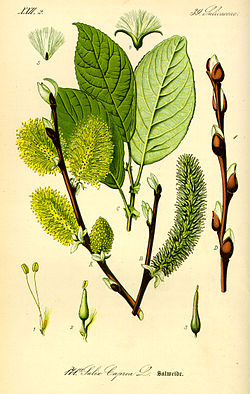
Salix yezo-alpina or Salix nakumurana (dwarf alpine willow) is a dwarf pussy willow that grows entirely prostrate. Native to the mountain slopes of Hokkaido Japan, this little wonder is as tough as nails. Able to survive harsh mountain terrain, yezo-alpina can take zone 3 temperatures (-40 to -30fahrenheit) without any problems. Growing only twelve inches tall and spreading six to eight feet, this handsome, garden groundcover plant can be a great alternative to the more pedestrian solutions of Pachysandra, Vinca minor (Periwinkle/Myrtle) and English Ivy. The most interesting attribute of this tiny plant has to be the large upright, two inch, catkins (pussy willow fuzzies) that we all just have to touch. This multi-seasonal plant offers something at every time of year. Along with the anticipated catkins, which incidentally are white and yellow, are the ovate, glossy green leaves, complete with white fur. Yes, fur! Google an image and you’ll see what I mean. As the seasons progress so does the foliage. What starts out in the spring as deep green finishes in the fall with outstanding yellow color complete with bronze and red highlights. Finally, the winter showcases thick purplish-mahogany bark hugging against the ground in a spidery format. Yezo-alpina does not crave excessive amounts of water as do other willow types. As for lighting conditions, they handle just about everything from sun to shade. However, the catkins seem to develop better in more sun. Suitable as a bonsai candidate, it develops a thick, tiny trunk with outreaching limbs. Other considerations for this dwarf willow include climbing down a rock wall or perhaps mass plant it, as we did, around a Salix caprea ‘Pendula’ (Kilmarnock Willow) and have silvery catkins everywhere.

Another favorite to look forward to is Forsythia viridissima var. koreana ‘Kumson’. This forsythia still has great golden blooms heralding the arrival of spring; however, it’s the foliage that will truly blow you away. Dark green leaves with silver venation remind one of an almost lizard-like skin appearance. More shade tolerant than other forsythia this one also has purple stems behind the yellow flowers. A moderate grower to six feet by six feet, Kumson offers interesting foliage that lasts through the fall. Tolerant to a wide range of soil types, as our most forsythia, this will benefit from heavy pruning. Prune Kumson right after its done flowering taking out the older, heavier canes. If you’re not so interested in the flowers and become enamored with the foliage, as I am, then prune again in mid-summer to appreciate more new growth with outstanding variegated foliage. Forsythia ‘Kumson’ has come to us by way of Korea through the efforts of Tim Wood of Spring Meadow Nurseries in Grand Haven, MN. What started out as a search for different types of hibiscus in 1999, at the Botanical Garden of Sungkyunkwan University, ended with the sleeper find of Kumson. The possibilities for this plant are endless. Force the stems in the winter for early indoor color. Use the plant as a quick screen in the sun or shade and appreciate eight months of beautiful foliage with a bonus month of golden flowers or simply plant one as a specimen in your garden.

There are so many plants to look forward to as the warmer seasons approach. However, there are plenty to appreciate this time of year as well. Today alone I came across an impressive witchhazel (Hamamelis x intermedia ‘Jelena’) with orange-copper tones. There are just so many plants and so little time.

Thursday, June 1, 2006

‘Ruby Slippers’

Since 1913 Princeton Nurseries has been associated with premium plant material. Their success is due, in large part, to their desire and dedication to not only produce but properly groom and finish their plants. “Research and development is a Princeton Nursery legacy and is a vital part of their future.” William Flemer III has selected outstanding shade trees from their seedling program. Such selections include Greenspire American ash, Green Mountain sugar maple, and this author’s favorite tree Princeton Sentry Ginkgo. They have a futuristic approach to producing and finishing plants, having a Cravo structure topping out at 25 feet tall, the highest in North America. This structure responds to unpredictable weather patterns and produces and houses everything from perennials to large caliper shade trees. Whether it’s producing over one million seedlings a year or lining out 175 acres to produce 110,000 units of plant material, there is still room to inspect and identify new candidates. The newest candidate to be added to their portfolio of introductions is Acer ginnala ‘Ruby Slippers.’

Acer ginnala (Amur Maple) has for too long been underused and underappreciated. Truly a “Hardy” tree, Amur maple is listed academically as a zone 3 (-40 degrees) tree. Typical attributes of Acer ginnala are opposite leaves, samaras that hang on until late fall, and an overall smaller habit lending itself well to smaller landscapes. Tolerant of drought, compacted soils and air pollution, Acer ginnala seems as tough as Ginkgo which has been around since the Jurassic and Cretaceous periods. In other words dinosaurs remember their habit.

Acer ginnala ‘Ruby Slippers’ was selected at Princeton Nursery from a seedling block in Allentown, New Jersey in 1990. Typically associated with multistems, ‘Ruby Slippers’ was chosen for its straight single stem. This small deciduous tree offers what any great tree can be remembered for. It has multi-seasonal interest. A dense canopy forms with the emergence of spring leaves and from here it only gets better. June, for me, is its best month. Samaras, those little whirly-gigs we put on our noses as kids, hang suspended like Dorothy’s slippers, giving us a false perception that this tree is flowering red. The intense color of the samaras (a dry fruit bearing a wing) is a precursor of what is to come in the fall. Outstanding hues of red and orange in the cooler autumn months are not to be outdone by the samaras in June and July. Let’s not forget that this is a multi-seasonal tree and that means that there must be winter interest as well. Smooth, gray bark and a dense canopy provide an outstanding winter silhouette rounding out this almost perfect bantam weight champion. Acer ginnala ‘Ruby Slipper’s versatility also includes a resistance to verticillium (a soil borne fungi) adaptability to soil and environmental stress and a usefulness amongst urban and suburban plantings. ‘Ruby Slippers’ is just as happy underneath power lines as it is as a focal point in your next suburban planting. Acer ginnala performs best in moist, well-drained soils, can be heavily pruned and is just as easily planted in the ground or in a container. Remember this little guy only matures to 15-20 feet tall and wide.

We have much to thank Princeton Nursery for. Their commitment to excellence over the years has led to some exciting botanical offerings. Building on William Flemer III successes, with his exciting introductions, we would be remiss not to mention the efforts of others involved with the cultivating and marketing of today’s plants. Kudos goes out to Andrea Bonville, who evaluates today’s promising plants and cooperates with researchers throughout the United States. Doug Webber, Vice President of sales and marketing and Fran Chismar, sales manager for Princeton Nursery who tirelessly help bring Princeton’s products to fruition and whose botanical coaching is nothing short of encyclopedic. We thank you as well.

Wednesday, February 1, 2006

Barking Up the Right Tree

Stripped of all their foliage standing naked amongst the winter landscape are some pretty amazing maple trees. Most people, it seems, are content buying the proverbial red cutleaf or laceleaf maple (Acer palmatum ‘Dissectum-Atropurpureum’) or the tiresome upright ‘Bloodgood’ maple. Perhaps it’s because their neighbor has purchased a similar style or maybe it’s because it’s the only type they have heard of. Truth is there are literally dozens of species and hundreds of named cultivars to tempt and satisfy even the most eclectic gardeners’ taste. With so many choices to choose from, it seems silly to always pick the same two or three types, especially if year round garden interest is your goal.

Acer griseum (Paperbark Maple) has become more commercially available in recent years; however it is still difficult to propagate. A noteworthy candidate for your garden, Paperbark has something going on all year. Dark bluish-green, trifoliate leaves (three leaved) kick off the attributes of this small to medium sized tree. Adaptable to a wide range of soil PH balances, griseum’s only stipulation is that you place it in well drained soil. Having a somewhat rounded canopy with age, Paperbark works well as a single lawn specimen or in areas of limited real estate. Outstanding, bright red, fall color can rival even that of ‘Burning Bush’. But let’s face it; what introduces most to this famed tree is the exfoliating bark. The peeling, flaky, cinnamon brown bark jumps out at you, not just in the winter, but all year long. Native to China and the fact that no two are alike only adds to the uniqueness of this versatile tree.

Acer palmatum ‘Sango Kaku’ (Coral Bark Maple) is an exciting Japanese maple. The unfolding leaves, early in the spring, show the slightest hints of red digressing quickly to a bold green. As fall approaches, these tiny, congested leaves take on color marking from yellow to pumpkin. A medium sized tree, Coral Bark, attains heights of fifteen to twenty five feet comfortably and prefers well drained soil. As the common name implies, Coral Bark, has just that. Beginning in the fall, the younger stems start to color up taking on red hues. Imagine the pumpkin color foliage backing these bright red stems. Only to impress us more are these same stems acting as a beacon entrenched in the snow storms of winter. Truly an impressive sight, you would be hard pressed to find a better winter interest tree.

Somewhat of an obscurity, but still noteworthy, is the species Acer pensylvanicum. Commonly known as the striped or snakebark maple, the bark is clearly what sets this apart and has propelled its notoriety. Quoting Michael Dirr, the horticultural demigod of our time, “The unflattering nickname refers to the whitish vertical fissures that develop on the bark, which when set against the greenish background conjure visions of a snake’s skin.” Whether an “unflattering nickname” or not, there is no denying the beautiful, pronounced, long, vertical, white stripes of the species. Two covetous cultivars available to gardeners are ‘White Tigress’ and ‘Erythrocladum’. ‘White Tigress’ has dark green bark with conspicuous white striations. Other common attributes prevail as it maintains typical green leaves in the spring changing to yellow in the fall. ‘Erythrocladum’ is a magnificent small tree with incredible bright pink bark, striped white, in the winter. Considered to be somewhat problematic to grow, the secret to their success is well drained soil. Overall presence in your garden for Acer pensylvanicum is fifteen to twenty feet tall and wide.

While flowers can be beautiful and sometimes fragrant and certain trees are known for their unique foliage, we can not forget that bark appeal can be equally as enticing. When you visit your local garden center this spring, admire the beautiful, red laceleaf maples, but remember the bright color markings of winter bark also.