Tuesday, July 1, 2008

Umbrella Pine

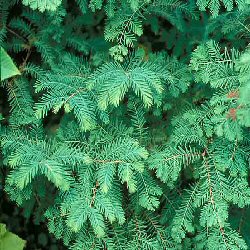
Sciadopitys verticillata or Japanese Umbrella pine has long been a curious creature that has excited first time gardeners as well as seasoned plants person. Ranking right up there with such inveterate conifers as Ginkgo and Metasequoia, Sciadopitys has its roots dating back to the upper Triassic period. In other words, dinosaurs were running while these were growing some 230 million years ago. Native to Japan, it is believed that the extent of this extant conifer ran from Eurasia to North America. The common name, Umbrella Pine, refers to the whorls of foliage which resemble the spokes of an umbrella.

Known for its unusual texture, Sciadopitys verticillata, is an extremely slow growing conifer. However, heights of 50-100 feet are obtainable. Perhaps the nicest single specimen I have seen in central New Jersey stands on the front lawn of the Summit Red Cross in Summit on Springfield Avenue. Tucked in among other conifers, this specimen stands well in the shade and has to be every bit of 40+ feet. With a 15 to 20 foot spread, this tree epitomizes this ancient conifer. Sciadopitys is a monotypic genus (a taxon having only one species) that grows tight and pyramidal in its youth while taking on more of an open, pyramidal outline in its winter years. Handsome as a specimen, but not limited to, I have seen container gardening done well with some smaller cultivars. Perhaps my favorite application of this unique conifer has to be a hedge line in Far Hills, New Jersey. Some years ago I was asked to do some consulting work on a private residence and witnessed a 40 foot hedge, some 10 feet tall of Umbrella pine. A vulgar display of wealth that had me dreaming of one day having my own while at the same time inspiring me at the versatility of plant material. Limited only by our own visions, this was truly an enduring impression that has stuck with me all these years.

A coniferous evergreen, Sciadopitys has dark green leaves or needles of two types. Under close examination, the needles appear to be almost fused together. Rich, thick, glossy foliage radiate around the stem in definite whorls, reminding one of an umbrella hence, the name. On larger specimens the bark is an interesting and beautiful attribute. Rich hues of orange and brown punctuate long strips of exfoliating, spongy, cork-like bark. A true tree hugger, I have hugged a huge specimen in Pennsylvania. St. Mary of Providence, located in West Nantmeal Township (the Honey Brook area) is home to a specimen Umbrella pine. The facility is a retirement home and retreat center for Catholic Church activities and is owned and operated by the archdiocese of Philadelphia. Some years ago John Stella, a brilliant plantsman and friend, took me there after tagging our spring deciduous trees at a nearby nursery. A true gentlemen whose tutelage has broadened my appreciation for plants while simultaneously forging a long term friendship.

Other notable attributes of this long lived conifer include, a non aggressive root system, little, if any potential pest problems and virtually no maintenance. This tree requires very little pruning to develop itself. While it seems to prefer adequate sunlight, as mentioned previously, the specimen in Summit, New Jersey is performing admirably in large amounts of shade. Highly adaptive to soil types, Sciadopitys seems to perform well in clay, loam, sand and well drained soil.

Perhaps the only shortcoming to owning one of these unique conifers is the cost. Slower growth and difficulties to propagate are the answers for its price tag. Once rooted however, the likelihood of its survival is in your favor. With container gardening continuing to be on the rise, several smaller cultivars are becoming more widely available. ‘Joe Kozey’ is a more fastigiate type, withstanding snow loads better because of its more sturdy branches. ‘Mitsch Select’ has shorter dark green needles and a more compact stature. ‘Sternschnuppe’ has all its characteristics more thick in appearance. Finally, you knew there had to be gold and variegated types out there as well. ‘Aurea’ and ‘Ann Haddow’ are their names.

While there is still some discrepancy as to which family Sciadopitys belongs to, listed both as Pinaceae and Taxodiaceae, there is no ambiguity as to how well Umbrella pine will perform for you. Adaptive to soil types, sunlight amounts and its reluctance to grow quickly make this a suitable candidate for almost anywhere. Couple these attributes with the increasing flavors available for smaller container gardening and Umbrella pine’s rubbery texture will have everyone marveling at its unique beauty.

Sunday, June 1, 2008

‘Pacific Fire’

Fifteen years ago I started an annual trek across the country in search of, arguably, some of the world’s finest plant materials. My first trip to the Pacific Northwest, Oregon specifically, was thrilling before I even hit the ground. As the plane was descending, I was fortunate enough to be sitting on the left side and Mount Hood was higher than the plane’s left wing. Mount Hood is a stratovolcano which boldly stands some 50 miles east-southeast of Portland. Home to twelve glaciers and listed as potentially active by the USGA (U.S. Geological Survey), Mount Hood’s elevation is 11,249 feet.

One of the perks of my job is to fly around the country and hand pick our plants for the coming year. Every year I visit Oregon and Mount Hood and look forward to having dinner at the Timberline Lodge on Mount Hood. For those of you who have seen the movie The Shining with Jack Nicholson, the Timberline Lodge is showcased. Timberline Lodge stands at 6,000 feet elevation, located on the southern flank just below Palmer Glacier. A National Historic Landmark, Timberline was built in the late 1930’s as a WPA (Works Progress Administration) project. This project, built during the Great Depression, is a classic example of the vision and fortitude those workers had during a most challenging time. A true craftsman style lodge, Timberline was built with huge timbers and local stone and is so aptly named as it stands where the Timberline starts or ends.

One tree native to the Northwest is Acer circinatum (Oregon Vine Maple). Commonly found from British Columbia to northern California, Vine Maple typically grows as an understory tree beneath more majestic conifers. With legions of huge Pseudotsuga menziesii (Douglas fir) in the Pacific Northwest, Acer circinatum sits comfortably at their feet. Frequently found as a multi-stemmed tree, Oregon Vine Maple can attain heights of 10 to 20 feet. Inconsistent fall color has a collage of yellow, orange and red hues. The leaves are palmately lobed with 7-9 lobes and the fruit is a two-seeded, red samara. Samara’s are those whirly-gig things we put on our noses as kids when they fall from the sky. When I first learned this tree, I thought the foliage to be very similar, in form only, to Acer shirasawanum ‘Aureum’ (Golden Full Moon Maple), both having a fan-shaped somewhat rounded outline. I later learned that Oregon Vine Maple is closely related to Acer japonicum (Fullmoon Maple) and Acer pseudosieboldianum (Korean Maple). Enjoying moist to wet locations, its growth rate is slow to medium. Highly adaptive, but preferring some afternoon shade and protection from wind, Acer circinatum would be an outstanding patio plant. Also noteworthy is that the new shoot growth is reddish in color.

Typically out on the west coast in July and August, this past year I visited the Pacific Northwest in February. A chance to see gardens in their dormant state gave a whole new appreciation for winter garden interest. While touring Monrovia Growers, from a distance, I saw the intense red color marking of what I thought was Acer palmatum ‘Sango Kaku,’ the famed Coral Bark Maple. After closer inspection I found that it was Acer circinatum ‘Pacific Fire’. Screaming for attention set against a grey stone wall, ‘Pacific Fire’ has stronger red and orange tones in the winter. As for spring growth, ours arrived this spring with the same intense red color markings and as I write this article in late April, the bark is still blood red. Martin Hanni, ornamental deciduous tree and perennial grower from Switzerland for Monrovia Growers and I had quite a conversation about this tree’s many attributes this past winter. As Michael Dirr says, “there is no better fraternity than that bound by the love of plants.” Subtle differences noted for ‘Pacific Fire’ include distinctive red bark, new growth emerging purple and orange in the spring, mature leaves which are a bright green in the summer and golden-yellow fall color.

Introduced into cultivation in 1826 by famed American botanist and explorer David Douglas, Oregon Vine Maple is well suited in New Jersey for no other reason than their tolerance to clay soil. An ability to thrive in acidic soils only welcomes it more to the Garden State. Consider pruning this tree in late winter as you can thoughtfully look at skeletal patterns to enhance its appearance. ‘Pacific Fire’ offers big seasonal changes for your landscape and won’t take up a large piece of real estate to do it.

Thursday, May 1, 2008

Wheel of Fortune


Behind a privacy row of Carpinus betulus ‘Fastigiata’ (Columnar European Hornbeams), situated in front of a large curvaceous bed of Imperata cylindrica ‘Red Baron’ (Japanese Blood Grass) and flanked by two Acer palmatum ‘Sharp’s Pygmy’ (Sharp’s Pygmy dwarf Japanese maples) lays a most curious tree on our property. Colleagues in the field have long been stumped identifying this small ornamental tree. Customers in our garden center have taken a stab at what it is by labeling it as a ficus tree, a type of rhododendron, some sort of mountain laurel or a type of euonymus. The truth of the matter, it is properly identified as Trochodendron aralioides (Wheel-tree).
Derived from the Greek words trochos meaning wheel and dendron meaning tree, the common name refers to the stamens (about 40-70 in total) appearing like spokes on a wheel comprising what is to be the flower. The full image of the flower, to me, looks like tiny green pin cushions held tightly together, suspended over dark green, leathery foliage, depicting an almost sci-fi flower presentation. The flower color is a light green smartly contrasting monochromatically with, again, darker green, leathery foliage. One can expect these unique flowers to appear late April through May. The leaves are three to five inches long, somewhat oval or lanceolate, leathery, lustrous and shallowly toothed or serrated. What is most surprising to many is that this tree may look “tropicalsih” in appearance, but, in fact, it is a true broadleaf evergreen tree that is unmistakingly “hardy!” I say unmistakingly hardy because academically this tree has been listed as a borderline zone 7 plant. In fact, we have been selling Trochodendron for several years now, in a zone 6 climate, and had fantastic results. Another misnomer is that the growing conditions for Wheel-tree need to be moist, well drained soil with shade being the preferred location. While I agree that this can be an ideal situation, ours is growing quite well on this west side of our house, on the front lawn, without any obstruction. Not to mention that in the winter months this particular area of our lawn can be quite wet. I do agree with popular belief that attempts to protect this tree from winter sun and desiccating winds is advantageous. Ours stood within a burlap barricade for the first winter and has since been on its own. Also noteworthy, once they’re in the ground they don’t like to be moved around. So plan for the future! The overall outline of this tenacious tree is roughly ten to fifteen feet high and about half as wide. Other attributes include reddish-bronze new growth, bronze green fall color and bark which is reminiscent of some conifers.
Technical stuff: anyone who has read a “Dummies Book” i.e. Computers for Dummies, Wine for Dummies, Golf for Dummies etc. will appreciate that reference. Considered a primitive feature of the Wheel-tree is the lack of vessels in its vascular system. Specialized xylem cells called tracheids (elongated cells) carry food and water through the plant. Very few flowering plants share this trait. However, is this primitive or advancement over time? Do they really need those vessels to survive or have Wheel-trees become more productive with fewer parts? A debate for the academics to discuss.
Native to the mountain forests of Japan, southern Korea and Taiwan, Trochodendron aralioides is the sole species to the genus Trochodendron and popularly considered the sole species in the family Trochodendraceae. Although, some botanists put the genus Tetracentron in the same family. Typically described as having a shrubby appearance, ours has become a handsome layered tree with very little effort. An attribute I am most enamored with is its lime-green outer branches. A nice contrast to the dark green foliage and light-green flowers when they appear.
Avowedly, not every garden will be fortunate enough to showcase such a prized ornamental. Difficult to find and even more difficult to secure, availability and demand for Trochodendron are growing. A gorgeous, evergreen tree to sit among larger deciduous trees and admire as a specimen! Wheel-tree, a flowering evergreen tree, providing year round interest will have you and your friends talking and others wishing they were as fortunate.

Tuesday, April 1, 2008

Going Native

Those who know me well know that my passion for unique plants often leans towards the coniferous end of the plant world. While I admit that conifers are exciting, offering bold textures, unique colors and interesting bark, my appreciation for deciduous and broadleaf plants is of equal veneration. No doubt the rare and sometimes obscure grab my attention though. Recalling what Mark Hunter, a friend and owner of Hunter Landscape Design, once said to me, “Bob, last month you picked a plant that no one has ever heard of. Where did you find it? Did you have it air lifted out of Tibet only to have it land in your garden center?” Guilty of admiring the unique, passionate and appreciative of all types of plants, I digress and pull to the forefront a native plant for this month’s topic. The often overlooked, but always eager to please…its Calycanthus floridus.

Assets for this plant run deep. Often when you are backed into a corner of finding a shade tolerant plant that is also deer resistant the options seem limited. People try to force part sun/part shade plants into equations while sorting through the ambiguity of the amount of sunlight they actually have. Calycanthus floridus goes by many common names. Carolina Allspice, common Sweetshrub, Strawberry-shrub and Spicebush are only a few of its colloquial agnomens. Native to the southeastern part of the United States (Virginia to Florida), Carolina Allspice was introduced in the early 1700’s. Exquisite maroon flowers are borne in May and last into the summer months. When fully opened the fragrance has been reminiscent of an almost strawberry-like fragrance, hence one of its common names Strawberry-shrub. The flowers are carried at the ends of leafy branchlets and the foliage is aromatic when bruised. This native’s flowers are followed, in the fall, by brown, urn-shaped capsules which persist well into the winter. One of the easier plants to establish, adapting to most soils, Sweetshrub prefers moist, loamy soils. It seems that most plants would prefer moist, well drained soils; however most will not tolerate the clay and shale soils that we are blessed with here in this part of New Jersey. That being said, Calycanthus has proven itself time and again in not only our soils but many other types as well. This deciduous shrub has dark green foliage in the spring and summer with uncelebrated yellow hues. Other noteworthy characteristics though are its resistance to disease and insect problems and its flexibility in landscape design. Consider using Spicebush as a shrub border or specimen. Last summer a friend of mine wrapped his outdoor barbeque pit area with this shrub creating an outdoor living room. At night, sitting around his manageable camp fire, we could smell strawberry and pineapple scents all the while protected from on lookers next door to him. At maturity heights of 6-10 feet tall and wide should be expected. The “hardiness” of the plant is zones 4-9.

On to the cultivars worth seeking out! Calycanthus f. ‘Margarita’ is a yellow flowering selection named after Margarita Cline of Georgia. ‘Michael Lindsey’ flowers a maroon-chestnut color which has a clove-like scent. The fall color markings of this plant are much better than the species. Brighter, more consistent yellow markings are the norm here. A side note; the species’ bark has reportedly been used as a spice, although not considered GRAS (Generally Recognized as Safe). Calycanthus, said to be toxic to livestock because of toxic alkaloids in the fruit supports my conclusion that it is this that deters our white-tailed deer from eating this plant. At least for now! One final one to seek out is Calycanthus x ‘Venus’. A cross between C. chinensis x C. floridus ‘Athens’ and C. chinensis x C. occidentalis, this one is spectacular. Developed at NC State University by Dr. Thomas Rainey, ‘Venus’ has large ivory-yellow buds that open into huge magnolia-like, white flowers with yellow and purple markings. The scent of this flower opened likens itself to the aromas of strawberries and melons. Sounds like a white wine description. Released in 2003, ‘Venus’ is very choice, very rare and as of today very expensive. A must have for the garden connoisseur.

It has been my experience that Carolina Allspice performs admirably in shade while withstanding deer browsing. That said, given the limitations that are available to garden consumers trying to satisfy these two avenues, this plant should not be one by default but rather an exciting choice with multi-seasonal interest. Fragrance, flowers, fruit and leaf color should be enough to entice most anyone.

Saturday, March 1, 2008

Not Just Dull, Green Pyramids

Often I find myself making comparisons between plants and wine. Being passionate about both has me always being inquisitive and never knowing it all. Having a deep appreciation for a subject matter leads to more interesting conversation, while strengthening relationships with others who share your interests. Enjoying wine can simply mean liking the taste of what you’re drinking. However, appreciating wine goes a bit further. It understands the ‘terroir’, a French word used as a collective term to describe the growing conditions of a vineyard, specifically the soil, climate, drainage, slope and topography to name a few. It is to understand the subtle nuances that make up this wonderful food, eclipsing the idea that one bottle of cabernet sauvignon is like any other bottle of cabernet sauvignon. Those who know wine can tell you that it is this ‘terroir’ that encompasses unmistakable attributes and characteristics which define certain regions of the world. That said, cabernet from Paso Robles tastes differently than that of Bordeaux. I enjoy both!

The same holds true with plant material. There are those whom I speak with in retail that simply want a dull, green pyramid dumped at the corner of their house, happy to have a plant that simply fills the space. Then there are those who I come across that ask more insightful questions. Questions about a trees bark, leaf or needle color markings and the development of cones all lead to longer conversation and an almost certain kinship. So what about those cones that seems to spark interest? Can they really be that interesting? And for that matter, can a conifer really flower?

The word conifer is derived from the Latin words, conus and ferre, meaning to bear cones. While all plants within this group do bear cones, not all do it with such flare. “Beginning as a tight cluster of female flowers, the cone develops to provide a receptacle, to nurture the growing seeds after fertilization” (Gardening with Conifers, Adrian Bloom). Male flowers may also grow in the shape of a cone; however, academically these remain flowers. Typically, the flowers and cones develop in the spring with cedars being an exception. Conifers that develop male and female flowers on the same tree are monoecious while those that develop them on different plants are dioecious. Male flowers can be as brightly colored as a male peacock pheasant. It is these brightly colored images on conifers that help pull me through the doldrums of winter.

Some of the more spectacular markings to look forward to this spring appear on Oriental spruce (Picea orientalis). Picea orientalis ‘Skylands’, a yellow form in our front yard, will develop red flowers this spring and an abundance of narrow cones. It is this explosion of red color backed with yellows and greens that I wait for every spring. Abies koreana ‘Horstmann’s Silberlocke’ is a conifer unlike any other. The recurved foliage of this tree has silver, white and blue markings. And while this alone would be enough to entice even the most experienced gardener, arguably the cones are even more impressive. Often described as violet-purple, these can be as long as 3 inches and as wide as one. Abies procera ‘Glauca Prostrata’ is another tree that develops beautiful crimson-red flowers in the spring. If you are unfamiliar with this tree in a garden consider the parent plant Abies procera (Noble fir) as your next cut Christmas tree. With gorgeous blue-green foliage, this is sure to outlast any other cut tree. Another botanical wonder worth mentioning is Picea abies ‘Acrocona’. Aptly named, ‘Acrocona’ means with terminal cones. Dripping with tons of cones held at its tips, this Norway spruce has phenomenal early spring markings. Screaming, raspberry red, male and female flowers develop, occurring on even the youngest of trees. Yet another harbinger of spring is Abies alba ‘Holden Arboretum’. This dwarf, silver fir has impressed me in recent years with its honey-green cones. The parent plant is capable of producing cones almost a half a foot by two inches wide.

When I first started in horticulture I thought the botanical nomenclature was difficult. Words like Metasequoia glyptostroboides don’t exactly roll off your tongue at first.

Going forward, trying to memorize grapes and regions has been an equally daunting task. Blessed with a loving family, a job that I truly love and a hobby, oenology, that I am eager to understand more of has me more than fulfilled. My cup has runnith over!

Friday, February 1, 2008

Anticipation

By the time the middle of winter rolls around most gardeners are chomping at the bit for the arrival of spring color. Although, the appreciation for winter interest gardens has helped satisfy my yearnings for unique texture and bold colors. The Acer griseum (Paperbark Maple) that stands boldly in our garden showcasing its flaky, torn mahogany colored bark is gratifying. The Cornus alba ‘Bailhalo’ (Ivory Halo Red Twig Dogwood) grove, which encase the Picea orientalis ‘Skylands’ (Yellow oriental Spruce) are electrifying this time of year and the wheat-colored Calamagrostis ‘Karl Foerster’s, are tantalizing as they dance in the winter winds. However, even with all this going on in our garden I can’t help but dream about the explosion of color that’s ahead in just a few short weeks. Buds that seem over ripe and plump are ready to erupt and the unfolding of spring is just around the corner. Two plants that I have learned about in recent years are some of the most exciting for spring color and texture.

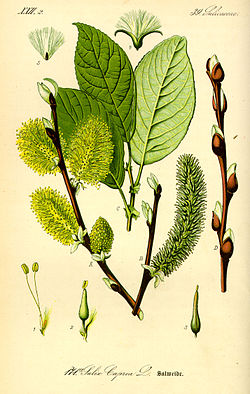
Salix yezo-alpina or Salix nakumurana (dwarf alpine willow) is a dwarf pussy willow that grows entirely prostrate. Native to the mountain slopes of Hokkaido Japan, this little wonder is as tough as nails. Able to survive harsh mountain terrain, yezo-alpina can take zone 3 temperatures (-40 to -30fahrenheit) without any problems. Growing only twelve inches tall and spreading six to eight feet, this handsome, garden groundcover plant can be a great alternative to the more pedestrian solutions of Pachysandra, Vinca minor (Periwinkle/Myrtle) and English Ivy. The most interesting attribute of this tiny plant has to be the large upright, two inch, catkins (pussy willow fuzzies) that we all just have to touch. This multi-seasonal plant offers something at every time of year. Along with the anticipated catkins, which incidentally are white and yellow, are the ovate, glossy green leaves, complete with white fur. Yes, fur! Google an image and you’ll see what I mean. As the seasons progress so does the foliage. What starts out in the spring as deep green finishes in the fall with outstanding yellow color complete with bronze and red highlights. Finally, the winter showcases thick purplish-mahogany bark hugging against the ground in a spidery format. Yezo-alpina does not crave excessive amounts of water as do other willow types. As for lighting conditions, they handle just about everything from sun to shade. However, the catkins seem to develop better in more sun. Suitable as a bonsai candidate, it develops a thick, tiny trunk with outreaching limbs. Other considerations for this dwarf willow include climbing down a rock wall or perhaps mass plant it, as we did, around a Salix caprea ‘Pendula’ (Kilmarnock Willow) and have silvery catkins everywhere.

Another favorite to look forward to is Forsythia viridissima var. koreana ‘Kumson’. This forsythia still has great golden blooms heralding the arrival of spring; however, it’s the foliage that will truly blow you away. Dark green leaves with silver venation remind one of an almost lizard-like skin appearance. More shade tolerant than other forsythia this one also has purple stems behind the yellow flowers. A moderate grower to six feet by six feet, Kumson offers interesting foliage that lasts through the fall. Tolerant to a wide range of soil types, as our most forsythia, this will benefit from heavy pruning. Prune Kumson right after its done flowering taking out the older, heavier canes. If you’re not so interested in the flowers and become enamored with the foliage, as I am, then prune again in mid-summer to appreciate more new growth with outstanding variegated foliage. Forsythia ‘Kumson’ has come to us by way of Korea through the efforts of Tim Wood of Spring Meadow Nurseries in Grand Haven, MN. What started out as a search for different types of hibiscus in 1999, at the Botanical Garden of Sungkyunkwan University, ended with the sleeper find of Kumson. The possibilities for this plant are endless. Force the stems in the winter for early indoor color. Use the plant as a quick screen in the sun or shade and appreciate eight months of beautiful foliage with a bonus month of golden flowers or simply plant one as a specimen in your garden.

There are so many plants to look forward to as the warmer seasons approach. However, there are plenty to appreciate this time of year as well. Today alone I came across an impressive witchhazel (Hamamelis x intermedia ‘Jelena’) with orange-copper tones. There are just so many plants and so little time.

Tuesday, January 1, 2008

Witch’s Broom

Tom Castronovo and the Gardener News will be hosting a symposium this April introducing their garden writers to the public. This event will cover a wide range of gardening topics, helping to educate those interested in the green industry. My topic of discussion will focus on “Smaller Plants for Smaller Spaces.” With residential property sizes shrinking in New Jersey, an emphasis on choosing smaller plants for smaller landscapes will be discussed. And while the topic implies small, there is in fact much to talk about. So much in fact that the topic of where some new plants come from will only briefly be discussed. This article however, affords me the opportunity to go in depth about one way plants are found and produced. So what is a Witch’s Broom anyway?

A witch’s broom is a mutation form occurring on an existing plant. Plant Geeks of the world, me included, hope to find these adaptations of plant life and develop new plants or cultivars from their find. This abnormality is a disease or deformity on a woody plant where the natural occurrences of the plant change. The result is a dense mass of shoots growing out from a single point resembling a broom or a bird’s nest. These congested growths are popularly found on spruce and pine, but are not limited to, as they can also be found on deciduous trees such as hackberry and maple. There are a number of “stresses” which can cause a witch’s broom. Both biological and environmental factors can contribute to the congested masses. Organisms such as fungi, phytoplasmas (bacterial-like organisms), mites, aphids, mistletoe and viruses are to blame biologically. Factors such as poor pruning practices or other physical damage to a tree may contribute to such an abnormality. Environmental stresses injure the growing points of branches, thus contributing to the formation of a broom. The cause of a broom can be difficult to determine, especially if the cause was an environmental factor. There may be only one broom on a tree or several. The abnormal growths create great opportunities for diversifying the plant world. Often diminutive forms of spruce and pine have been created that fit well into smaller landscapes. However, far too often are similar cultivars being raised, contributing to the confusion of similar, if not exact, plants.

There are innumerable witch’s brooms and the vocabulary of naming them is just as exciting. In 1904 a witch’s broom on a Norway spruce (Picea abies) was found and named ‘Nidiformis’. This well known dwarf Birds Nest Spruce type has a flat top and is wider than it is tall. Horizontal layers of branches with short green needles afford this candidate many landscape possibilities. In 1958 a witch’s broom was found on a witch’s broom in Holland. Picea abies ‘Nidiformis’ provided the world with Picea abies ‘Little Gem’. Little Gem has the tiniest of green needles and has been described as a “living rock”. Suitable in almost any garden, this dwarf conifer could be your next container garden candidate. Another mentionable favorite is Picea abies ‘Lanham’s Beehive’. Founded by Gary Lanham on a mature Norway Spruce, this one has a beehive form. The needles are longer and thicker than most other nest types. They (the needles) also have a slight glaucous tint (a waxy bloom or whitish material that rubs off) and the stems and buds are cinnamon colored. We’re really going deep now! ‘Picea glauca ‘Humpty Dumpty’ is a dwarf White Spruce whose origin is from the popular dwarf Alberta Spruce. This squatty form is as wide at the base as it is tall. The list goes on and on and the vocabulary just gets more interesting. “Thumbelina’ and ‘Witches’ Brood’ are two forms of dwarf Norway Spruce. “Tom Thumb’ is a bright gold, oriental spruce miniature with short, layered branches. This yellow form, and most others, likes a harmonious balance between sun and shade. While most green forms are happiest in sun.

The term witch’s broom comes from the German word Hexenbesen, meaning to bewitch (hex) a bundle of twigs (besom). The next time you go hiking, look around your surroundings up in the trees. You may be able to name your own plant and become immortalized in the plant world. Gardeners interested can obtain more information about witch’s brooms by visiting wbgardens.com. The website features Jan Salma who is a dwarf conifer collector from the Czech Republic. While the site is not the easiest to navigate, it does provide great photographs. Enjoy and happy hunting.