Showing posts with label Conifer. Show all posts

Friday, January 1, 2010

“Resinous Exudations”

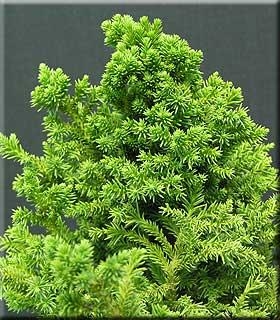
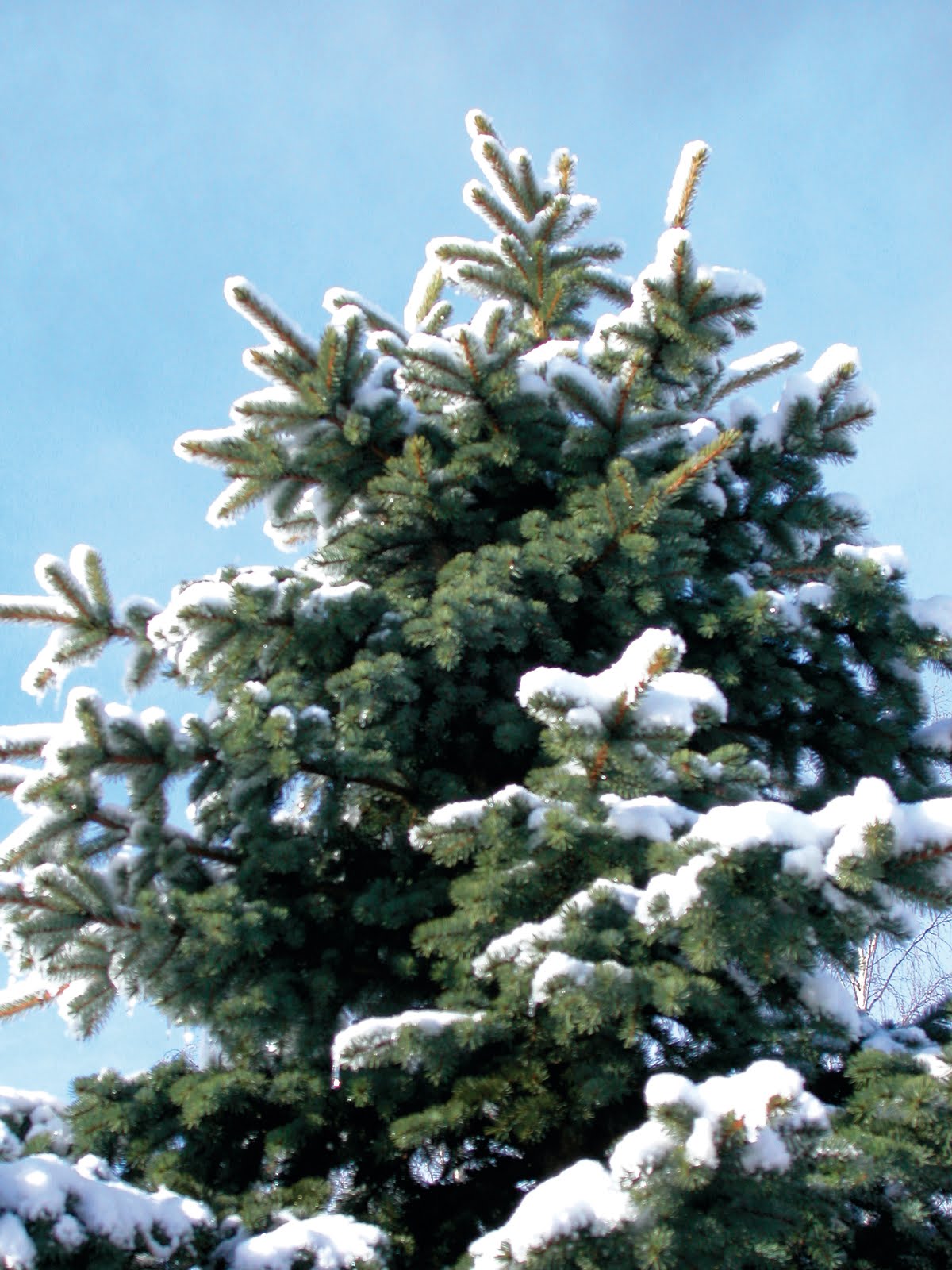
Longing to write about this tree for some time, I find it timely to discuss the possibilities of a unique dwarf conifer. Now that the holidays are behind us what could be planted into our outdoor containers other than using the proverbial dwarf Alberta spruce (Picea glauca ‘Conica’)? As a garden center owner I am always astounded as to the number of DAS (dwarf Alberta spruce) we sell as an industry. Known to be problematic, a condominium for spider mites, water hogs and eager for full sun, most seem to be planted in containers far too small for their root systems and forced into cramped, unlit surroundings. Allow me to introduce a substitute… Bristlecone Pine (Pinus aristata).

Years ago, studying at Rutgers University, I had a plant identification class where I learned this tree for the first time. Pinus aristata is a five-needle type conifer (leaves borne 5 together) with an extremely slow growing habit. Bluish-green needles adorn a most picturesque character both in its adolescence and more mature years. The bark of a Bristlecone morphs from a smooth grey-green when it’s young to a more fissured, rust color as it matures. The needles are aromatic, but it’s the white dots commonly found along the needles that have always intrigued me. Resinous exudations (secreting a viscous marking through its pores) are markings that look like tiny sugar crystals sitting along the needles that many confuse as insect or fungal issues. These, in fact, are natural occurrences that quickly help to identify what type of tree you are looking at. Tolerant to dry soils, they make a great container plant for those who are remiss in their watering habits. While Bristlecone can obtain heights of 20-40 feet and are documented as one of the oldest living plants on earth, this dwarf conifer could survive in a planter almost indefinitely. Three to five foot plants can take the better part of 20 years to achieve. Native to the Southwestern United States, Pinus aristata has often been referred to as a Foxtail pine because of the bushy effect of its foliage.

As with any great plant this also has a few cultivars to be on the lookout for. ‘Sherwood Compacta’ is a plant I have, as a pair, welcoming guests as they approach our walkway. Even slower growing than the species, ‘Sherwood Compacta’ is a handsome, perfect little pyramid. Complete with small purple cones in the spring, it has “tightly packed tufts of medium-long, green needles with white undersides” (Iseli Nursery). Found and named by the late Oregon nurseryman Andy Sherwood, ‘Sherwood Compacta’ is a cultivar that can survive years in a contained area. ‘Formal Form’ is another Great Basin Bristlecone Pine that has a more narrow, uniform shape, which is larger than ‘Sherwood Compacta’ and smaller than ‘Blue Heron’. The needles are 1.5 inches long and radiate, as do the others, around the ascending branches. All are long-lived plants.

Speaking of longevity, as previously mentioned, Bristlecone’s are among the oldest living plants in the world. One such plant, “Methuselah”, is aptly named after Methuselah, the longest-lived person in the Bible. The tree is located in the “Ancient Bristlecone Pine Forest in the White Mountains of eastern California, however, it’s precise location is undisclosed by the U.S. Forest Service to protect the tree from vandalism” ( Methuselah Walk. U.S. Forest Service/ Eastern Sierra Interpretive Association). Core samples were taken in 1957 and estimated the tree to be 4,789 years old then. It is the oldest known individual tree in the world and non-clonal organism still alive. Its estimated germination is 2832 BC! Considering that Bristlecone’s may only obtain an inch or so in diameter in the course of a century, you can appreciate the perseverance of such a tree. To clarify any confusion, the fore mentioned tree is categorized as Pinus longaeva. Pinus aristata, longaeva and balfouriana are all closely related species of Bristlecone pine. Cold temperatures, dry soils, high winds and shorter growing seasons all contribute to the stagnation of a Bristlecone’s development. As a result, the wood is quite dense and resinous creating a natural barrier for insects and fungi to penetrate.

Suitable for rock gardens, bonsai work, an entrance piece to a garden or an outstanding container plant, Pinus aristata can have many uses. Tolerant to dry soils, less likely to be invaded by spider mites and a slow grower are all reasons to consider this over the more pedestrian dwarf Alberta spruce. Not to mention the neat white spots you can stump your friends with when they think an insect is invading your tree. You know better!

Saturday, March 1, 2008

Not Just Dull, Green Pyramids

Often I find myself making comparisons between plants and wine. Being passionate about both has me always being inquisitive and never knowing it all. Having a deep appreciation for a subject matter leads to more interesting conversation, while strengthening relationships with others who share your interests. Enjoying wine can simply mean liking the taste of what you’re drinking. However, appreciating wine goes a bit further. It understands the ‘terroir’, a French word used as a collective term to describe the growing conditions of a vineyard, specifically the soil, climate, drainage, slope and topography to name a few. It is to understand the subtle nuances that make up this wonderful food, eclipsing the idea that one bottle of cabernet sauvignon is like any other bottle of cabernet sauvignon. Those who know wine can tell you that it is this ‘terroir’ that encompasses unmistakable attributes and characteristics which define certain regions of the world. That said, cabernet from Paso Robles tastes differently than that of Bordeaux. I enjoy both!

The same holds true with plant material. There are those whom I speak with in retail that simply want a dull, green pyramid dumped at the corner of their house, happy to have a plant that simply fills the space. Then there are those who I come across that ask more insightful questions. Questions about a trees bark, leaf or needle color markings and the development of cones all lead to longer conversation and an almost certain kinship. So what about those cones that seems to spark interest? Can they really be that interesting? And for that matter, can a conifer really flower?

The word conifer is derived from the Latin words, conus and ferre, meaning to bear cones. While all plants within this group do bear cones, not all do it with such flare. “Beginning as a tight cluster of female flowers, the cone develops to provide a receptacle, to nurture the growing seeds after fertilization” (Gardening with Conifers, Adrian Bloom). Male flowers may also grow in the shape of a cone; however, academically these remain flowers. Typically, the flowers and cones develop in the spring with cedars being an exception. Conifers that develop male and female flowers on the same tree are monoecious while those that develop them on different plants are dioecious. Male flowers can be as brightly colored as a male peacock pheasant. It is these brightly colored images on conifers that help pull me through the doldrums of winter.

Some of the more spectacular markings to look forward to this spring appear on Oriental spruce (Picea orientalis). Picea orientalis ‘Skylands’, a yellow form in our front yard, will develop red flowers this spring and an abundance of narrow cones. It is this explosion of red color backed with yellows and greens that I wait for every spring. Abies koreana ‘Horstmann’s Silberlocke’ is a conifer unlike any other. The recurved foliage of this tree has silver, white and blue markings. And while this alone would be enough to entice even the most experienced gardener, arguably the cones are even more impressive. Often described as violet-purple, these can be as long as 3 inches and as wide as one. Abies procera ‘Glauca Prostrata’ is another tree that develops beautiful crimson-red flowers in the spring. If you are unfamiliar with this tree in a garden consider the parent plant Abies procera (Noble fir) as your next cut Christmas tree. With gorgeous blue-green foliage, this is sure to outlast any other cut tree. Another botanical wonder worth mentioning is Picea abies ‘Acrocona’. Aptly named, ‘Acrocona’ means with terminal cones. Dripping with tons of cones held at its tips, this Norway spruce has phenomenal early spring markings. Screaming, raspberry red, male and female flowers develop, occurring on even the youngest of trees. Yet another harbinger of spring is Abies alba ‘Holden Arboretum’. This dwarf, silver fir has impressed me in recent years with its honey-green cones. The parent plant is capable of producing cones almost a half a foot by two inches wide.

When I first started in horticulture I thought the botanical nomenclature was difficult. Words like Metasequoia glyptostroboides don’t exactly roll off your tongue at first.

Going forward, trying to memorize grapes and regions has been an equally daunting task. Blessed with a loving family, a job that I truly love and a hobby, oenology, that I am eager to understand more of has me more than fulfilled. My cup has runnith over!

Saturday, December 1, 2007

Sugi: A Revered Conifer in Japan

With the holidays quickly approaching, there is a sense of urgency to decorate and adorn our homes. While Christmas trees are a small part of the holiday season, the selection of tree types is enormous. The popular candidates are Douglas Fir (Pseudotsuga menziesii), Fraser Fir (Abies fraseri), Balsam Fir (Abies balsamea), Grand Fir (Abies grandis), Noble Fir (Abies procera), White Fir (Abies concolor), Nordmann Fir (Abies nordmanniana), Colorado Spruce (Picea pungens) and Norway spruce (Picea abies). While these are all attractive Christmas trees most are also used for privacy screens and shade trees in our landscapes. Another Mega Conifer to consider for our landscapes is the very versatile Cryptomeria japonica (Japanese Cedar).

Today’s academics still list Cryptomeria as part of the Taxodiaceae family. Grouped with the likes of Metasequoia (Dawn Redwood), Sequoia and Sequoiadendron (Coast Redwoods and Giant Redwoods) as well as Sciadopitys (Umbrella Pine) to name a few. However, just as Sciadopitys is listed a few ways, also in the Pinaceae family, so to is Cryptomeria being pushed towards the Cupressaceae family (Cypress family). A discussion for the academics, there is no denying the vast potential of this conifer. Those who are introduced to Cryptomeria for the first time are usually enamored with its rope-like foliage, which is blue-green and rubbery to the touch. A broad pyramidal tree as an older specimen, Cryptomeria japonica can reach heights of 50-70 feet high by 20-30 feet wide. However, “Jomon Sugi” one of the largest specimens of Cryptomeria or Sugi known, found on the island of Yakushima, Japan, stands a mere 26.1 meters tall and is said to date back almost 3000 years. Sugi incidentally is the vernacular name for Cryptomeria in Japan and is quickly becoming adapted elsewhere. Other distinguishing attributes of this majestic conifer include bark which is reddish-brown, peeling in long strips, cones which are terminal and somewhat round and an ability to grow in a range of soil types. Sugi prefers sun to part shade and appreciates shelter from high winds. This easy to grow superstar fills out quickly and can be useful as a hedge/screen or specimen. One of the few conifers that will coppice (sprout back from cut stumps) you can cut back aggressively and rejuvenate older, overlooked trees. Look for purple-bronze overtones in the winter as well.

Native to Japan and arguably southern China, Cryptomeria has a plethora of cultivars to choose from. Cryptomeria j. ‘Black Dragon’ has a vigorous growth spurt early on and then slowly fills out to an appreciable 10-15 feet in as many years. Light green new growth ages to one of the darkest greens for all Sugi’s and is maintained in the winter. ‘Mignone’ has caught the attention of many people including my dear friends Mitch Krause and Jessica Cordts who recently bought out a collection and mass planted them around a Trochodendron tree. Monochromatic gardening at its best! ‘Mignone’ sports rope-like branchlets and has an overall dense appearance. This suitable dwarf cultivar eventually matures to an upright broad conifer. ‘Sekkan’ is an upright conifer with sulfur yellow markings. A quick growing cultivar adds a punctuation of color to any garden. A personal favorite is ‘Rein’s Dense Jade’. Unusual texture and jade green markings, this cultivar in more fastigiate than it is pyramidal. The needles are held tightly to the stem and the winter helps offer purple-bronze markings. There are 54 planted at our house in a hedge form creating a skeletal backdrop for a large garden room. Unprotected from the winter, they stand on the north, south, east and west ends and are glorious. Finally, ‘Vilmoriniana’ can fit into anyone’s garden. Pointed short needles lead you from green to a purple-bronze in the winter. A dwarf form that is dense and globose at maturity.

Sugi (Cryptomeria) the national tree of Japan is so revered in its native land that not only does it have its own stamp but it is often planted around temples and is part of sacred grounds. One notable house of worship is the Shrine at Ise, Japan. A Shinto shrine to the goddess Amaterasu omikami it is set within ancient forests of giant Cryptomeria. A name derived from the Greek kryptos (hidden) and meros (part) certainly contradicts and reveals much of itself. A conifer with bright green new growth, purple-bronze markings in the winter and bark that is reddish-pink in color and slightly scented, truly is a conifer for all seasons. Now, if we could only get them as a cut Christmas tree…that would be something.

Monday, October 1, 2007

Cathaya argyrophylla: An Endangered, Uncommon Conifer

John Stella (John Stella Horticultural Sales) is a friend, colleague and plant enthusiast whose vast botanical knowledge is not only encyclopedic, but seldom rivaled. John often refers to certain plants as “BIO Plants”, an acronym for Botanical Interest Only. His usage as an adjective is often out of fascination, admiration or trivial interest for plants. Hidden from the world until 1955, the genus Cathaya was virtually unknown and today still stumps the most inquisitive horticultural minds.

Imagine a trek, totaling several days, climbing mountainous terrain, in search of a rare conifer only to be met by bureaucratic resistance. Resistance layered with local police, the local tourist bureau, the forestry department, the public secretary bureau, the Mayor’s office, and the Chinese army. Known only as a fossil record from tertiary sediments in Eurasia, Cathaya was rediscovered in 1955 by Chinese scientists in southeastern Szechwan and has been found growing in parts of Hunan, Guangxi, and Guizhou. Jinfu Shan, the destination for our early explorers, was home for this extraordinary conifer. A member of the pine family (Pinaceae) this monotypic conifer (a sole member of its group or single species) seems to favor limestone outcrops and areas of heavy summer rain. Extremely rare in cultivation, this curious conifer has similarities to the following genus groups: Abies (fir), Picea (spruce), Tsuga (hemlock), Pseudotsuga (Douglas fir), Larix (larch), Cedrus (cedar) and Pinus (pines). An evolutionary marvel, Cathaya has its embryo and pollen resembling that of true pines (Pinus), its wood similar to Douglas fir (Pseudotsuga), and its overall habit and seed producing cones reciprocal to spruce (Picea).

After an arduous journey to the United States from the People’s Republic of China, we have Dr. James Waddick of Kansas City, Missouri to credit Cathaya’s arrival. Dr Waddick has been “Championed” for distributing Cathaya argyrophylla to the Western World. Forwarded from the offices of the Conifer Conservation Programme at the Royal Botanic Garden, Edinburgh, the Arnold Arboretum of Harvard University and Iseli Nursery in Oregon were among the first to be bestowed with the treasures of Cathaya. Andre Iseli, former owner of Iseli Nursery, the conifer capital of the world, was determined to be the first person to acquire the seed of Cathaya. Since 1991, Iseli has received six different seed crops from various sources and in 1995 successfully germinated four seeds. From these four seeds, two remain at Iseli Nursery, one standing over six feet tall now. One continues to grow at Andre Iseli’s garden and the forth was auctioned at the Conifer Society in 2000 after being donated by Iseli Nursery.

The cold hardiness of the plant is still under review. Iseli Nursery, after successfully germinating several seeds from a 1998 crop, selflessly gifted twenty specimens to friends throughout the country. In an effort to determine the plants hardiness, Iseli only asked for feedback as to how the plant performs from region to region. Among the few to receive such a gift, I can say that the plant performs admirably in central New Jersey and has not been browsed by deer. Time will Tell! Aesthetic similarities include that of Sciadopitys (Umbrella Pine) and Cunninghamia (China fir) as its needles are long and wide.

The word argyrophylla literally means “silvery leaves”. The lush green leaves, in fact have a silver underbelly. Growing amongst such familiar plants as rhododendrons, cotoneaster and enkianthus the initial grove of Cathaya, standing some ten meters (thirty-three feet) must have had an indelible impression for the chosen few who first meet them. Despite the initial bureaucratic red tape those early plant hunters encountered, a call to the governor and some political pull not only allowed trespassing, but permitted the touch and photography of these historical creatures. “They have hid from the modern world until only recently. Pondering the pressure of more than six billion people and the pollution from our industrialized world, I wondered whether the trees would have been better off remaining hidden” (Pacific Horticulture 2001). Despite the efforts of footholds filled with concrete, rough areas that were smoothed over that would have served as grips and installing barriers of rock and concrete, the elevation of 5600 feet was reached. Through the mist and beyond the dense thicket of bamboo stood the grove of Yinshan (the Chinese name for Cathaya argyrophylla). Thankfully there are those among us who have the forward thinking to honor the past by protecting it and ensuring its survival by careful and thoughtful toils. Thank you to the People’s Republic for understanding that preservation can endure without simply hiding the truth and to Iseli Nursery for their cutting edge science and remarkable generosity to pay it forward.

Saturday, April 1, 2006

A Colorful Conifer

When I was a child growing up there was nothing like the anticipation of Christmas day. Waiting, not so patiently, for the day to arrive and hopefully open the gift that I had asked for. One of the benefits of gardening is that with every season there is a new gift to wait patiently for. Perhaps the most anticipated gifts are those of spring. Maybe it’s because of the low temperatures we have just endured or because of winters shorter days and longer nights. But now that spring is finally here, we again have the explosion of color and the unfolding textures providing us with a heightened sense for the outdoors.

Picea orientalis (Oriental Spruce) has for a long time been underused and under appreciated. Native to the Caucasus and Northeast Turkey, this majestic beauty was introduced in 1827. So why is it taking so long for the public to grasp its beauty? A strikingly beautiful conifer, orientalis offers a dense, narrow, pyramid form with glossy, dark green foliage. The needles are short, closely packed together and have somewhat of a blunt tip to them. Cultivated specimens often reach heights of 50-60 feet; however native trees have reached heights of more than 100 feet. Male flowers are a showy red and the fruiting cones, produced in abundance in May, are a bright rose-pink to red digressing to a tannish-brown. More notable, however, is its landscape value. Having a more narrow habit makes it suitable for smaller properties offering an incredible range of versatility. Used more appropriately as a screen than Picea abies (Norway spruce), it can also be useful as a specimen or shade tree when a coniferous evergreen is desired. Picea orientalis is virtually pest free, not succumbing as readily to the problems of spider mite, spruce gall aphid, and borer that Norway spruce will almost certainly get. Orientalis prefers moist, well-drained soil, as do most conifers, and is more tolerant of arid conditions than most other spruce. However, it is not classified as drought tolerant. Full sun and protection from strong winter winds are two other keys to its success. With so much versatility it’s almost greedy to ask more from this tree.

As with most plants there are cultivars available that can enhance already attractive attributes. This tree is no exception. Two personal favorites are Picea orientalis ‘Aureospicata’ and “Skylands”. Picea o. “Aureospicata” has me waiting all winter for three short weeks. Early in the spring “Aureospicata’s” new growth emerges at the tip of the branches in bright yellow. From a distance it looks as though there are tiny canaries perched on every branch. This phenomenon happens at the end of April to early May and is truly a gardener’s treat. By early summer all of the yellow tips will fade and mature to a dark green. “Skylands” is another gem that has been sought out for its pronounced yellow markings. A beautiful contrast of yellow exterior needles and dark green interior foliage create year round enjoyment. Both cultivars develop slowly at first, but given the opportunity finish nicely with a full, pyramidal outline.

If your intention is to run a hedge line of spruce down your property line to distance yourself from your neighbors then consider Picea orientalis as a solution. Its overall presence will be more narrow, thus enabling you to plant them slightly closer. However, this does not mean that placing them 5 feet apart is the answer. Often I see proverbial hedge lines of Norway spruce, Douglas fir, blue spruce and hemlock planted five feet from one another. This not only lacks creativeness, but it is an unhealthy solution to your problem. Poor air circulation, root development problems and light penetration will quickly point out the error of your ways. There are many conifers that can offer you the privacy you’re after. Some may be more fiscally challenging to put on your property at first, but given the choice of planting it right the first time or planting the area twice, go with the earlier. Hopefully your decision will be to go with a conifer that offers purplish-red cones and yellow new growth.

Thursday, December 1, 2005

TREEMENDOUS CONIFERS

It takes a Christmas tree farm an average of eight to twelve years to bring their crop to fruition. Most of these growers also harvest their product for transplanted sales. That is to say that they are selling live trees throughout the year to be transplanted into our living spaces. With all the time and effort it takes to grow these beautiful evergreens, why do so many continue to site conifers in the wrong location?

Perhaps the single most important question to ask yourself when purchasing a conifer for your landscape is, HOW MUCH SUNLIGHT DO I GET?” The second most important question is, “HOW MUCH SPACE DO I HAVE FOR THEM?” Far too often, as I look at contemporary landscapes, I notice HUGE site problems with conifers. Blue spruce (Picea pungens) planted five foot on center in a straight hedge line or Norway spruce (Picea abies) planted in heavy shade are not thoughtful solutions. Most conifers, cone-bearing trees or shrubs, prefer full sun to light shade. While there are some that will thrive in shade, they are not spruce, juniper, pine and fir. With all the new construction going on in New Jersey right now, there seems to be a race for immediate gratification when creating or rebuilding our landscapes. Blue spruce, white pine, Douglas fir, Norway spruce, and Hemlock are all prodigious conifers that over time will reach heights of forty to sixty feet tall and twenty to thirty feet wide. And if we envision planting these trees for the enjoyment of future generations then eighty to one hundred feet tall becomes our reality. Consider planting cultivars!

“A cultivar, or cultivated variety, is a group of plants under cultivation whose members differ from other members of the same species in one or more characteristics.” This can be achieved by an abnormality in the wild, hybridization or be selected under cultivation. An example of this is the prosaic Alberta Spruce which almost every gardener knows. The Alberta spruce, or dwarf white spruce, is a cultivar found by J.G. Jack and Alfred Rehder at Lake Laggan, Alberta, Canada in 1904. What all this technical stuff boils down to is there is always the right plant for the right location available. That is if you are willing to ask enough questions. Don’t be swayed by size and price. Just because you can buy a larger tree for less money does not mean that it is the right tree. Should you truly want a blue spruce hedge, consider planting Picea pungens ‘Blue Totem” or “Iseli Fastigiate.” These are two noteworthy narrow forms which mimic the form and function of another popular cultivar Emerald Green Arborvitae. Both blue spruce types are far better solutions, long term, than the species. If you are dealing with shady environments and still enjoy the texture of coniferous materials, don’t despair. There are still some candidates that are available to you. Hemlock, Yews, Umbrella pine and Japanese plum yew are at your disposal. Each species is a proven winner in shadier locations and all have usable cultivars for smaller footprints or more troublesome spots. For example, “I have a shady location with deer, but I want an evergreen conifer to cover my air conditioning unit”. Solution, Cephalotaxus harringtonia ‘Fastigiata’ (Japanese Plum Yew) will afford you the screen you so desire.

Remember that plants are a life form. They require food, water and attention. Ask as many questions as you can and try not to let monetary restrictions dictate your choices. There will always be a place for the larger species plants, but they should be limited to larger surroundings. Remember that the size of a tree at purchase does not determine the likelihood of its existence. Liken your decision making process to an engagement ring purchase. Cut, clarity and color are far more important than size. Do your homework!

Friday, July 1, 2005

A Deciduous Conifer

For many the term deciduous conifer seems to be a misnomer. The thought of a tree losing its foliage yet still considered a conifer is improbable. Often I talk about selecting smaller plants for smaller garden footprints. There are times however, when a large tree, whether evergreen or deciduous, just captures our attention and has us staring in awe. Looking on at some of these majestic creatures has us contemplating age, endurance and historical significance.

Ginkgo biloba, ginkgo, has been around for some 150 million years. Dating back to the Jurassic and Cretaceous periods, a time when dinosaurs ruled, this garden gem inhabited Asia, Europe, and North America. It was not only widespread, but common to these areas. Ginkgo or Maidenhair tree has its common name from its leaves resembling those of Maidenhair Fern (Adiantum). Thought to be extinct, we have German physician and botanist, Engelbert Kaempfer, to thank for his discovery of Ginkgo in Japan in 1691. The curiously shaped leaves of this majestic conifer are distinctive in appearance A link between present and past, this tree can live longer than 3,000 years holding some of times unanswered secrets. Distinctive, two lobed, leaves are somewhat leathery, waxy, and fan shaped with an attached leaf stalk. As a younger tree, Ginkgo, is more open in appearance, however over time it becomes a dense, handsome specimen with spreading rigidly ramified branching. Its bark is gray-brown with even darker furrows. Ginkgo prefers full sun to partial shade and moist, well drained soils. However, you would have to look far to find a tree more adaptable. Known to grow in poor, compacted soils, this tree has endured fungal, insect pests, viral, bacterial diseases, ozone and sulfur dioxide pollution, fire and even radioactive radiation (atom bomb WWII).

Ginkgo comes from the Chinese word Ginkyo or “silver –apricot”, referencing the seed size and appearance to that of an apricot and the silvery bloom of the fruit. When possible, purchase male varieties as you will avoid the unpleasant fleshy seedcoat of the female. The fallen seed of the female has been compared to rancid butter as it decomposes having the presence of butanoic acid, a byproduct of many plants and animals. In the late 1950’s medicine began to catch up to Ginkgo realizing that extracts from the tree can improve blood circulation and memory, thus preventing blood clotting, providing an improved sense of well-being. The leaves are also used in tea for a variety of ailments. In fact the nut has long been used in Chinese medicine for asthma, bronchitis and digestive aid. They are even eaten as a side dish when drinking sake.

Several cultivars and varieties are available today which deviate from their parental giant. Ginkgo b. “Fastigaiata” is an architectural vertical accent that is almost columnar in appearance. “Magyar” is an upright narrow, pyramidal form with clean, green summer leaves. “Princeton Sentry” exhibits uniformed upright branching, remaining narrow over time and is this authors favorite tree. The preceding three cultivars incidentally are all male. Still others are available with spreading characteristics “Pragense” and variegated foliage “Rainbow and Variegata.” A constant of almost all ginkgos is the expected electric fall color display of yellow-gold. Remember while there are smaller types for smaller landscape footprints, Ginkgo biloba will hit 60 to 80 feet some day.

One of the toughest trees you will find, Maidenhair’s application can be a street tree, sited for urban development, used in parks or find a cultivar to hide away in your own garden. A tree of ancient lineage this “golden living fossil” has been revered by Buddhist monks and has its place along side temples. Paleobotanist, Sir Albert Seward (1938) said it best, “It appeals to the historic soul: we see it as an emblem of changelessness, a heritage from worlds too remote for our human intelligence to grasp, a tree which has in its keeping the secrets of the immeasurable past.”