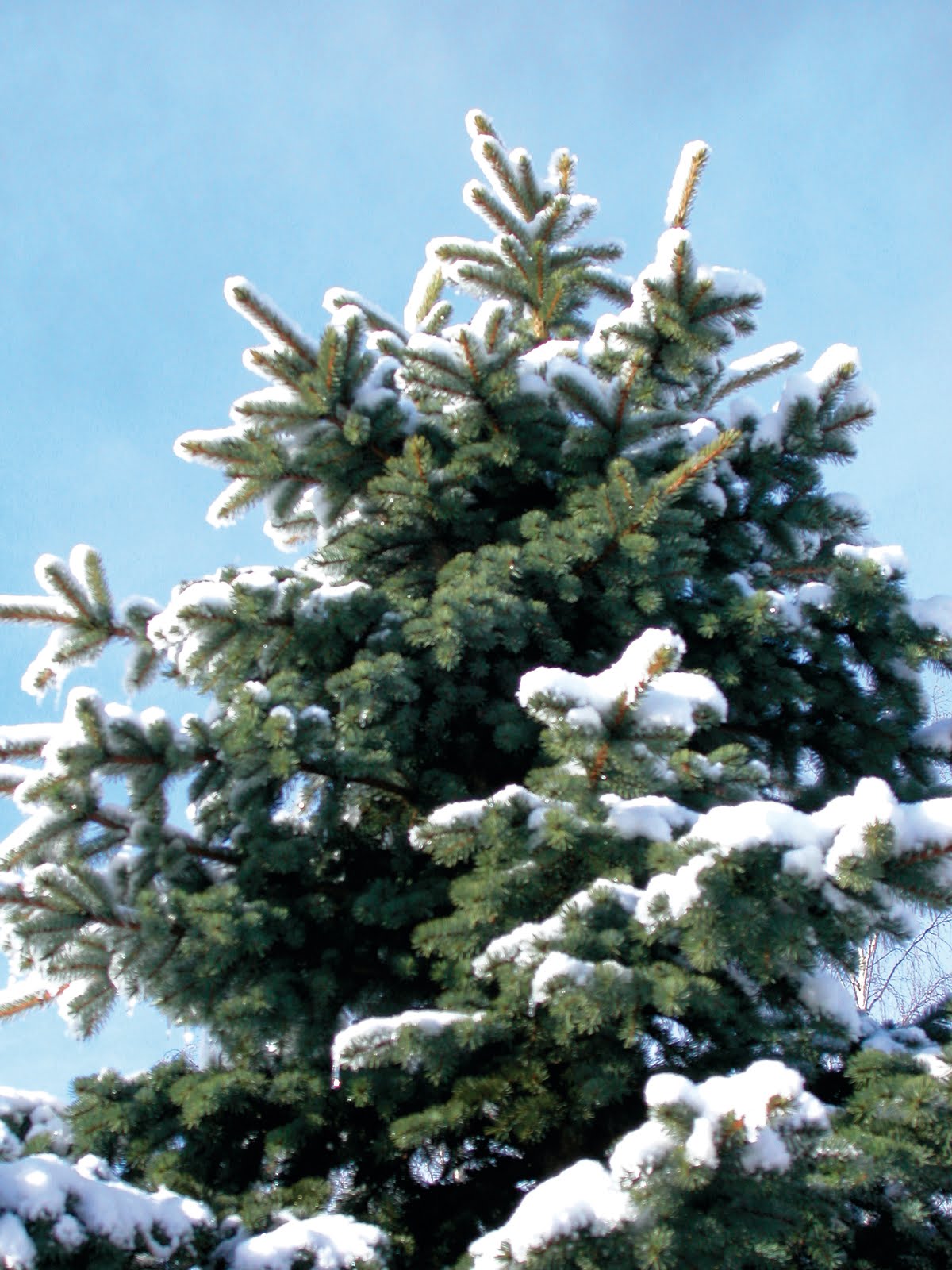
Showing posts with label Spruce. Show all posts

Friday, January 1, 2010

“Resinous Exudations”

Longing to write about this tree for some time, I find it timely to discuss the possibilities of a unique dwarf conifer. Now that the holidays are behind us what could be planted into our outdoor containers other than using the proverbial dwarf Alberta spruce (Picea glauca ‘Conica’)? As a garden center owner I am always astounded as to the number of DAS (dwarf Alberta spruce) we sell as an industry. Known to be problematic, a condominium for spider mites, water hogs and eager for full sun, most seem to be planted in containers far too small for their root systems and forced into cramped, unlit surroundings. Allow me to introduce a substitute… Bristlecone Pine (Pinus aristata).

Years ago, studying at Rutgers University, I had a plant identification class where I learned this tree for the first time. Pinus aristata is a five-needle type conifer (leaves borne 5 together) with an extremely slow growing habit. Bluish-green needles adorn a most picturesque character both in its adolescence and more mature years. The bark of a Bristlecone morphs from a smooth grey-green when it’s young to a more fissured, rust color as it matures. The needles are aromatic, but it’s the white dots commonly found along the needles that have always intrigued me. Resinous exudations (secreting a viscous marking through its pores) are markings that look like tiny sugar crystals sitting along the needles that many confuse as insect or fungal issues. These, in fact, are natural occurrences that quickly help to identify what type of tree you are looking at. Tolerant to dry soils, they make a great container plant for those who are remiss in their watering habits. While Bristlecone can obtain heights of 20-40 feet and are documented as one of the oldest living plants on earth, this dwarf conifer could survive in a planter almost indefinitely. Three to five foot plants can take the better part of 20 years to achieve. Native to the Southwestern United States, Pinus aristata has often been referred to as a Foxtail pine because of the bushy effect of its foliage.

As with any great plant this also has a few cultivars to be on the lookout for. ‘Sherwood Compacta’ is a plant I have, as a pair, welcoming guests as they approach our walkway. Even slower growing than the species, ‘Sherwood Compacta’ is a handsome, perfect little pyramid. Complete with small purple cones in the spring, it has “tightly packed tufts of medium-long, green needles with white undersides” (Iseli Nursery). Found and named by the late Oregon nurseryman Andy Sherwood, ‘Sherwood Compacta’ is a cultivar that can survive years in a contained area. ‘Formal Form’ is another Great Basin Bristlecone Pine that has a more narrow, uniform shape, which is larger than ‘Sherwood Compacta’ and smaller than ‘Blue Heron’. The needles are 1.5 inches long and radiate, as do the others, around the ascending branches. All are long-lived plants.

Speaking of longevity, as previously mentioned, Bristlecone’s are among the oldest living plants in the world. One such plant, “Methuselah”, is aptly named after Methuselah, the longest-lived person in the Bible. The tree is located in the “Ancient Bristlecone Pine Forest in the White Mountains of eastern California, however, it’s precise location is undisclosed by the U.S. Forest Service to protect the tree from vandalism” ( Methuselah Walk. U.S. Forest Service/ Eastern Sierra Interpretive Association). Core samples were taken in 1957 and estimated the tree to be 4,789 years old then. It is the oldest known individual tree in the world and non-clonal organism still alive. Its estimated germination is 2832 BC! Considering that Bristlecone’s may only obtain an inch or so in diameter in the course of a century, you can appreciate the perseverance of such a tree. To clarify any confusion, the fore mentioned tree is categorized as Pinus longaeva. Pinus aristata, longaeva and balfouriana are all closely related species of Bristlecone pine. Cold temperatures, dry soils, high winds and shorter growing seasons all contribute to the stagnation of a Bristlecone’s development. As a result, the wood is quite dense and resinous creating a natural barrier for insects and fungi to penetrate.

Suitable for rock gardens, bonsai work, an entrance piece to a garden or an outstanding container plant, Pinus aristata can have many uses. Tolerant to dry soils, less likely to be invaded by spider mites and a slow grower are all reasons to consider this over the more pedestrian dwarf Alberta spruce. Not to mention the neat white spots you can stump your friends with when they think an insect is invading your tree. You know better!

Friday, December 1, 2006

A Symbol of the Season

Finland (Lapland) has Santa Claus, Germany has its Christmas markets and Russia is noted for their traditional, handmade Christmas ornaments. But who has bragging rights for the first decorated Christmas tree? Located in Northeastern Europe, nestled between Estonia, Russia, Belarus and Lithuania lays the country Latvia. Riga, Latvia has by many been credited with first decorating an evergreen tree in the year 1510. This popular holiday tradition, decorating Christmas trees, may have started here, but today in the United States we celebrate by purchasing nearly 35 million Real Christmas Trees every year as reported by the National Christmas Tree Association.

Sold commercially in the United States since about 1850, Christmas trees have been subject to many speculations and myths. First, of the nearly 35 million trees sold each year, 95 percent are shipped and sold directly from Christmas tree farms. California, Oregon, Michigan, Washington, Wisconsin, Pennsylvania and North Carolina are among the leading producers with Oregon consistently ranking toward the top. Typically, the best selling trees are Scotch pine, Douglas fir, Noble fir, Fraser fir, Balsam fir and White pine for reasons which will be discussed further in the article. More than 2,000 trees, on average, are planted per acre of which half to two thirds will survive. It takes an average of six to ten years to obtain a mature six to seven foot tree, fighting the elements of rain, wind, ice and drought to name a few. There are more than 21,000 Christmas tree growers in North America and nearly 12,000 “cut-your-own” farms. Finally, 2-3 seedlings are planted for every harvested Christmas tree. So much for the statistics.

Much more is needed to produce the quintessential Christmas tree than simply taking a seedling, planting it, and hoping for the best. Science and technology have largely improved upon the early days of 1851 when Mark Carr opened the first Christmas tree retail lot in New York. Today’s trees are sought out and “created” to ensure that the most perfect, predictable and “hardy” tree will endure to its final destination, your home. This past summer while I was visiting nurseries and tagging nursery stock for next spring, I had the opportunity to visit a Christmas tree grower in Oregon. Silver Mountain Christmas Trees in Oregon is one of the largest producers of Christmas trees in the United States. Owner and operator Jim Heater was kind enough to show his operation and educate me on the science of growing the perfect tree. First, seed orchards are created to find elite seeds. To obtain these seeds cones must be present and autumn is the right time of year to harvest. Careful hands pollinate and cross pollinate several families to produce stronger trees. When the cones are mature they are picked and then thrashed to remove the seed which are then cleaned. Seeds are then planted precisely by a Vacuum Precision Seeder which spaces out seedlings, giving them equal shares of sunlight, moisture and space, thus eliminating problems from being too close. Grown in seed beds for two years, these future trees are then uprooted and replanted again into a transplant bed. A Reciprocating Undercutter Wrencher, another patented piece of machinery that is sold throughout the world by Silver Mountain, root prunes underneath the ground, thus creating more fibrous feeder roots able to take in more nutrients. Eventually these small trees are brought to production beds where they will continue to be nurtured and evaluated. After all “a good start ensures, healthy, stronger plants.” Over the next 6 to 10 years, Jim’s trees will continue to be monitored until they are ready to be harvested. Hand culturing begins once the trees hit his production fields. This is done to create a nice full pyramid, for which many demand at market. Shearing the trees properly helps create an almost perfect product for an imperfect profession. Double topping helps eliminate competing leaders, creating a nice, straight top. This is done on an individual basis and thus is very labor intensive. Grading crews evaluate quality and height and harvesting starts in November. Silver Mountain can harvest 5,000 trees a day as crews work almost around the clock. The most remarkable part of the harvest though is his ability to work over any terrain or through almost any weather. Helicopters are used to pull trees out of his fields, thus eliminating damage to his trees.

Whether you purchase a tree from a “cut-your-own” farm or garden center there are many choices to consider. Fragrance, needle retention, texture and color dictate many a decision. Balsam fir (Abies balsamea) has short, flat, long lasting needles that are dark green with a silver cast. Typically, this tree is associated with having that “traditional Christmas tree smell.” Douglas fir (Pseudotsuga menziesii) smells like oranges. Needles are blue to dark green, about 1 ½” and also hold their needles well. Named for David Douglas who studied the tree in the 1800’s, this tree can live for a thousand years. White Pine (Pinus strobus) has soft, long, blue-green needles with a very full appearance. This tree has very little fragrance and doesn’t hold heavy ornaments as well. Scotch pine (Pinus sylvestris) has stiff branching, dark green needles that are about an inch long and hold ornaments very well. Fraser fir (Abies fraseri) has quickly become the standard for Christmas trees. Dark green-blue needles, about an inch long, adorn this pyramidal-shaped tree. Good fragrance and excellent needle retention have catapulted this tree to stardom over the last decade. Last but not least is Noble fir (Abies procera). If I could liken a tree for a moment to a car, than this is your Ferrari. Bluish-green needles that are almost rubbery to the touch never seem to shed on your floor. Stiff branches hold heavier ornaments and it has a great fragrance.

Another way to enjoy your holiday is by planting a b&b tree. B&B (ball and burlap) trees are live trees that you can later plant in your yard. Though it can be more of an arduous task the rewards are numerous. Thoughtfully pick a location in your yard suitable for a conifer. Remember that most conifers, a cone-bearing tree or shrub, do not like shade. While there are a few exceptions, those listed previously enjoy more sun than shade. Remember that these species trees are all majestic giants. They will some day reach for the sky. So give them plenty of room and try not to plant them in a hedge line five feet apart from one another as this will have a pejorative affect on your landscape. Be mindful that live trees are becoming more popular. Go to your local plant purveyor and ask to purchase your tree and have it delivered or picked up closer to Christmas. Once your tree is home place it in your garage for a day or two, so as to slowly acclimate the tree from the temperature outside from that of inside. Try not to have your live tree in your house for more than five to seven days and reverse the procedure when you plant your tree after the holidays. Dig the hole prior to the ground freezing as this will facilitate your planting.

Evergreens around the holiday conjure up feelings of nostalgia, longing for our childhood past. Cut trees are multi faceted as they can be recycled and used as mulch after the holiday season. Live trees not only provide a habitat for wildlife but also grow as our families do. Wherever you purchase your tree this year be cognizant of its height as trees look smaller outside than they do inside your home. Check for needle retention by pulling on the limbs to see if any needles fall off. Remember to put a fresh cut on your cut tree and keep it well irrigated during the first ten days. A cut tree can consume more than a quart of water per day. Choose a cool location away from drafts and any nearby heat source such as a fireplace, radiator or stove. Feel great about your purchase knowing that this year alone nearly 73 million new Christmas trees will be planted. Finally, remember that cut trees came from mother earth…so be kind and recycle when possible. Consumers can locate the nearest recycling program by logging onto www.realchristmastrees.org or by calling 1-800-CLEANUP.

Saturday, April 1, 2006

A Colorful Conifer

When I was a child growing up there was nothing like the anticipation of Christmas day. Waiting, not so patiently, for the day to arrive and hopefully open the gift that I had asked for. One of the benefits of gardening is that with every season there is a new gift to wait patiently for. Perhaps the most anticipated gifts are those of spring. Maybe it’s because of the low temperatures we have just endured or because of winters shorter days and longer nights. But now that spring is finally here, we again have the explosion of color and the unfolding textures providing us with a heightened sense for the outdoors.

Picea orientalis (Oriental Spruce) has for a long time been underused and under appreciated. Native to the Caucasus and Northeast Turkey, this majestic beauty was introduced in 1827. So why is it taking so long for the public to grasp its beauty? A strikingly beautiful conifer, orientalis offers a dense, narrow, pyramid form with glossy, dark green foliage. The needles are short, closely packed together and have somewhat of a blunt tip to them. Cultivated specimens often reach heights of 50-60 feet; however native trees have reached heights of more than 100 feet. Male flowers are a showy red and the fruiting cones, produced in abundance in May, are a bright rose-pink to red digressing to a tannish-brown. More notable, however, is its landscape value. Having a more narrow habit makes it suitable for smaller properties offering an incredible range of versatility. Used more appropriately as a screen than Picea abies (Norway spruce), it can also be useful as a specimen or shade tree when a coniferous evergreen is desired. Picea orientalis is virtually pest free, not succumbing as readily to the problems of spider mite, spruce gall aphid, and borer that Norway spruce will almost certainly get. Orientalis prefers moist, well-drained soil, as do most conifers, and is more tolerant of arid conditions than most other spruce. However, it is not classified as drought tolerant. Full sun and protection from strong winter winds are two other keys to its success. With so much versatility it’s almost greedy to ask more from this tree.

As with most plants there are cultivars available that can enhance already attractive attributes. This tree is no exception. Two personal favorites are Picea orientalis ‘Aureospicata’ and “Skylands”. Picea o. “Aureospicata” has me waiting all winter for three short weeks. Early in the spring “Aureospicata’s” new growth emerges at the tip of the branches in bright yellow. From a distance it looks as though there are tiny canaries perched on every branch. This phenomenon happens at the end of April to early May and is truly a gardener’s treat. By early summer all of the yellow tips will fade and mature to a dark green. “Skylands” is another gem that has been sought out for its pronounced yellow markings. A beautiful contrast of yellow exterior needles and dark green interior foliage create year round enjoyment. Both cultivars develop slowly at first, but given the opportunity finish nicely with a full, pyramidal outline.

If your intention is to run a hedge line of spruce down your property line to distance yourself from your neighbors then consider Picea orientalis as a solution. Its overall presence will be more narrow, thus enabling you to plant them slightly closer. However, this does not mean that placing them 5 feet apart is the answer. Often I see proverbial hedge lines of Norway spruce, Douglas fir, blue spruce and hemlock planted five feet from one another. This not only lacks creativeness, but it is an unhealthy solution to your problem. Poor air circulation, root development problems and light penetration will quickly point out the error of your ways. There are many conifers that can offer you the privacy you’re after. Some may be more fiscally challenging to put on your property at first, but given the choice of planting it right the first time or planting the area twice, go with the earlier. Hopefully your decision will be to go with a conifer that offers purplish-red cones and yellow new growth.

Thursday, December 1, 2005

TREEMENDOUS CONIFERS

It takes a Christmas tree farm an average of eight to twelve years to bring their crop to fruition. Most of these growers also harvest their product for transplanted sales. That is to say that they are selling live trees throughout the year to be transplanted into our living spaces. With all the time and effort it takes to grow these beautiful evergreens, why do so many continue to site conifers in the wrong location?

Perhaps the single most important question to ask yourself when purchasing a conifer for your landscape is, HOW MUCH SUNLIGHT DO I GET?” The second most important question is, “HOW MUCH SPACE DO I HAVE FOR THEM?” Far too often, as I look at contemporary landscapes, I notice HUGE site problems with conifers. Blue spruce (Picea pungens) planted five foot on center in a straight hedge line or Norway spruce (Picea abies) planted in heavy shade are not thoughtful solutions. Most conifers, cone-bearing trees or shrubs, prefer full sun to light shade. While there are some that will thrive in shade, they are not spruce, juniper, pine and fir. With all the new construction going on in New Jersey right now, there seems to be a race for immediate gratification when creating or rebuilding our landscapes. Blue spruce, white pine, Douglas fir, Norway spruce, and Hemlock are all prodigious conifers that over time will reach heights of forty to sixty feet tall and twenty to thirty feet wide. And if we envision planting these trees for the enjoyment of future generations then eighty to one hundred feet tall becomes our reality. Consider planting cultivars!

“A cultivar, or cultivated variety, is a group of plants under cultivation whose members differ from other members of the same species in one or more characteristics.” This can be achieved by an abnormality in the wild, hybridization or be selected under cultivation. An example of this is the prosaic Alberta Spruce which almost every gardener knows. The Alberta spruce, or dwarf white spruce, is a cultivar found by J.G. Jack and Alfred Rehder at Lake Laggan, Alberta, Canada in 1904. What all this technical stuff boils down to is there is always the right plant for the right location available. That is if you are willing to ask enough questions. Don’t be swayed by size and price. Just because you can buy a larger tree for less money does not mean that it is the right tree. Should you truly want a blue spruce hedge, consider planting Picea pungens ‘Blue Totem” or “Iseli Fastigiate.” These are two noteworthy narrow forms which mimic the form and function of another popular cultivar Emerald Green Arborvitae. Both blue spruce types are far better solutions, long term, than the species. If you are dealing with shady environments and still enjoy the texture of coniferous materials, don’t despair. There are still some candidates that are available to you. Hemlock, Yews, Umbrella pine and Japanese plum yew are at your disposal. Each species is a proven winner in shadier locations and all have usable cultivars for smaller footprints or more troublesome spots. For example, “I have a shady location with deer, but I want an evergreen conifer to cover my air conditioning unit”. Solution, Cephalotaxus harringtonia ‘Fastigiata’ (Japanese Plum Yew) will afford you the screen you so desire.

Remember that plants are a life form. They require food, water and attention. Ask as many questions as you can and try not to let monetary restrictions dictate your choices. There will always be a place for the larger species plants, but they should be limited to larger surroundings. Remember that the size of a tree at purchase does not determine the likelihood of its existence. Liken your decision making process to an engagement ring purchase. Cut, clarity and color are far more important than size. Do your homework!