Friday, January 1, 2010

“Resinous Exudations”

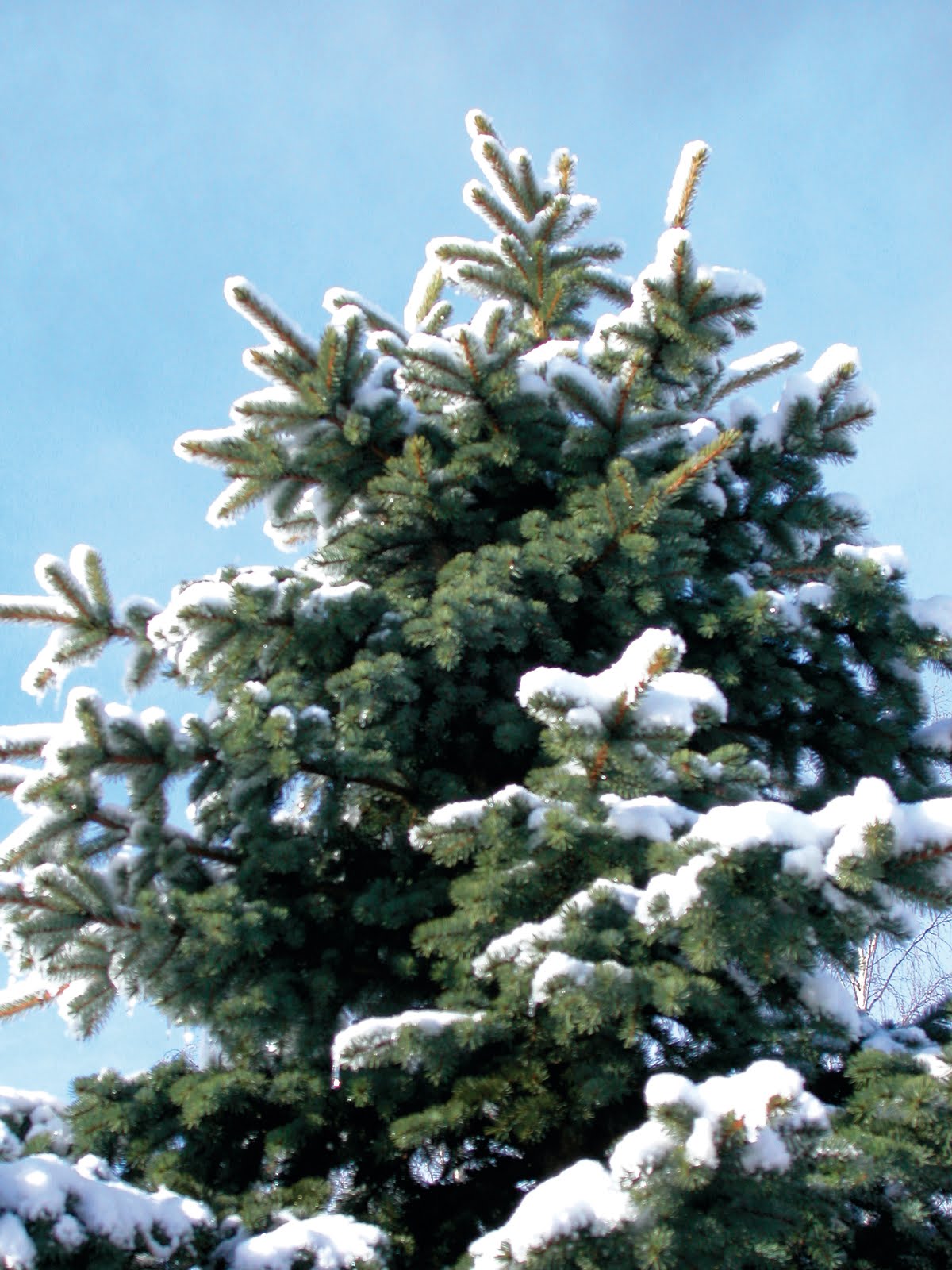
Longing to write about this tree for some time, I find it timely to discuss the possibilities of a unique dwarf conifer. Now that the holidays are behind us what could be planted into our outdoor containers other than using the proverbial dwarf Alberta spruce (Picea glauca ‘Conica’)? As a garden center owner I am always astounded as to the number of DAS (dwarf Alberta spruce) we sell as an industry. Known to be problematic, a condominium for spider mites, water hogs and eager for full sun, most seem to be planted in containers far too small for their root systems and forced into cramped, unlit surroundings. Allow me to introduce a substitute… Bristlecone Pine (Pinus aristata).

Years ago, studying at Rutgers University, I had a plant identification class where I learned this tree for the first time. Pinus aristata is a five-needle type conifer (leaves borne 5 together) with an extremely slow growing habit. Bluish-green needles adorn a most picturesque character both in its adolescence and more mature years. The bark of a Bristlecone morphs from a smooth grey-green when it’s young to a more fissured, rust color as it matures. The needles are aromatic, but it’s the white dots commonly found along the needles that have always intrigued me. Resinous exudations (secreting a viscous marking through its pores) are markings that look like tiny sugar crystals sitting along the needles that many confuse as insect or fungal issues. These, in fact, are natural occurrences that quickly help to identify what type of tree you are looking at. Tolerant to dry soils, they make a great container plant for those who are remiss in their watering habits. While Bristlecone can obtain heights of 20-40 feet and are documented as one of the oldest living plants on earth, this dwarf conifer could survive in a planter almost indefinitely. Three to five foot plants can take the better part of 20 years to achieve. Native to the Southwestern United States, Pinus aristata has often been referred to as a Foxtail pine because of the bushy effect of its foliage.

As with any great plant this also has a few cultivars to be on the lookout for. ‘Sherwood Compacta’ is a plant I have, as a pair, welcoming guests as they approach our walkway. Even slower growing than the species, ‘Sherwood Compacta’ is a handsome, perfect little pyramid. Complete with small purple cones in the spring, it has “tightly packed tufts of medium-long, green needles with white undersides” (Iseli Nursery). Found and named by the late Oregon nurseryman Andy Sherwood, ‘Sherwood Compacta’ is a cultivar that can survive years in a contained area. ‘Formal Form’ is another Great Basin Bristlecone Pine that has a more narrow, uniform shape, which is larger than ‘Sherwood Compacta’ and smaller than ‘Blue Heron’. The needles are 1.5 inches long and radiate, as do the others, around the ascending branches. All are long-lived plants.

Speaking of longevity, as previously mentioned, Bristlecone’s are among the oldest living plants in the world. One such plant, “Methuselah”, is aptly named after Methuselah, the longest-lived person in the Bible. The tree is located in the “Ancient Bristlecone Pine Forest in the White Mountains of eastern California, however, it’s precise location is undisclosed by the U.S. Forest Service to protect the tree from vandalism” ( Methuselah Walk. U.S. Forest Service/ Eastern Sierra Interpretive Association). Core samples were taken in 1957 and estimated the tree to be 4,789 years old then. It is the oldest known individual tree in the world and non-clonal organism still alive. Its estimated germination is 2832 BC! Considering that Bristlecone’s may only obtain an inch or so in diameter in the course of a century, you can appreciate the perseverance of such a tree. To clarify any confusion, the fore mentioned tree is categorized as Pinus longaeva. Pinus aristata, longaeva and balfouriana are all closely related species of Bristlecone pine. Cold temperatures, dry soils, high winds and shorter growing seasons all contribute to the stagnation of a Bristlecone’s development. As a result, the wood is quite dense and resinous creating a natural barrier for insects and fungi to penetrate.

Suitable for rock gardens, bonsai work, an entrance piece to a garden or an outstanding container plant, Pinus aristata can have many uses. Tolerant to dry soils, less likely to be invaded by spider mites and a slow grower are all reasons to consider this over the more pedestrian dwarf Alberta spruce. Not to mention the neat white spots you can stump your friends with when they think an insect is invading your tree. You know better!

Tuesday, December 1, 2009

Bold Vision

The title of this article is a slight adaptation of Richard Hartlage’s book, Bold Visions for the Garden. Richard Hartlage is a garden designer, writer, lecturer and photographer who was trained in ornamental horticulture at North Carolina State University. Mr. Hartlage has “15 years in public gardening as superintendent of horticulture for the Morris County Park Commission where he directed horticulture at both Willowwood and Frelinghuysen Arboretums.” Today, he is an associate principal at AHBL, Inc., a planning and engineering firm located in Tacoma, Washington, managing the landscape architect division and woks with private and public clients around the country. Having had the fore mentioned book for several years and sharing his love for plants and bold textures in the garden, I recently had a few opportunities to visit some of his work as well as hear him lecture.

Stephen Schuckman, owner of First Mountain Arboriculture LLC, Certified Tree Expert and Consulting Municipal Arborist, my former boss and longtime friend invited my family to a gardening extravaganza in Nutley, New Jersey, which Steve manages. Richard Hartlage has been involved with designing these gardens for almost two decades. Two distinctly different gardens, across the street from one another; embrace style, color, texture and scale so flawlessly that they left me speechless. Couple these principles with some large-scale planters, artwork and interesting sculptures and you can begin to feel a sort of “grand theatrical gesture” going on. On one side of the street a smaller garden feels very cozy with several defined outdoor spaces. Colorful, tropical, vibrant, energetic and exciting are all words to describe this outdoor phenomenon. Soothing blue walls define the perimeter landscape. A hidden hot tub underneath a wooden patio area is just one example of a concealed space that awaits you at every turn. Passiflora, Colocasia, Coleus and Caladiums are all used in mass plantings, many of which are used as foundation plantings and ground cover. Across the street is a classical stroll garden with exciting twists and turns all on 2.3 acres. Hidden garden rooms, a clumping grove of bamboo (Fargesia rufa), geometric Hornbeams cut into rectangular pillars, a huge sweep, some 10,000, of Japanese Forest Grass (Hakonechloa), a huge hill of Liriope, named Mount Si, are just a few of the highlights awaiting the visitor. A feeling of privacy and ease immediately calms you as you leisurely walk this magnificent garden and stare at the nearly 180 outdoor art objects. Two highlights, for me, were the baboon garden and a mass planting of Rohdea japonica. A granite baboon sits peering through some tropical’s, at the foot of a bed, mass planted with dwarf Mondo Grass (Ophiopogon japonicus ‘Nanus’). Rohdea is a seldom seen, tough perennial with broad strap-like, evergreen leaves. Its appearance is exotic especially when the clumps of winter red berries appear. Hartlage was quick to point out, in his talk, that when designing, it’s not about what is rare, but rather what will work.

The following week I took my family on an outing to Willowwood Arboretum located in Chester Township. Anxious to see pages 30 and 31 of Hartlage’s book, Bold Visions for the Garden, it was, of course, better in person. An enormous meadow of little bluestem, a native grass to New Jersey, had a deliberate path carved through it. Another notable experience was an almost quadrant of these four trees: Dawn Redwood (Metasequoia glyptostroboides), Persian Parrotia (Parrotia persica), Osakazuki Japanese Maple (Acer palmatum ‘Osakazuki’) and an enormous Chinese Quince (Pseudocydonia sinensis), complete with mottled, colorful combinations of exfoliating bark, reminiscent of Chinese Elm. These four trees alone, situated so closely to one another was a sensory overload for me. Watching our two-year-old daughter cross a mossed bridge, through a bamboo grove and into the forest, exploring on her first hiking trip, relived childhood experiences for her parents. Another outstanding outing where Hartlage left his mark, softening the edges of our daily grind.

Growing up in Kentucky, Richard Hartlage was quick to point out his love for seasonal change. More fond of the deciduous, hardwood trees changing into their fall colors than he is a fan of the evergreens, his landscapes seem to be driven by artistic movement, defined spaces and large sweeps of plant material. His lecture at the Arsenal in Central Park was worth braving the elements that evening. A raw October evening with sleeting rain didn’t seem to stop his fans. The Metro Hort Group provided the forum and Richard Hartlage did not disappoint. I found Mr. Hartlage to be affable, gracious, witty, comical and forthright. His visions are quantum and his implementations are timeless. Clearly one of today’s best designers, Richard Hartlage gives credit to those who have inspired him, Gertrude Jekll, Topher Delaney and Roberto Burle-Marx as well as the contractors who implement his ideas. His words, which he so graciously wrote in my copy of Bold Visions for the Garden, sum it all up… garden with clarity and vision!

Sunday, November 1, 2009

Name Dropping

High above the clouds, sitting here at 36,000 feet I became inspired to write about my next article. My semi-annual trek across the country, in search of next year’s nursery stock, has me reminiscing about the colorful nomenclature often associated with the plants you purchase. And the need to understand some Latin and directing that specific vocabulary into everyday usage should not be seen as elitist, but rather as a more clear understanding of what it is you really want in your own garden. Let me explain!

Most of us know that the road to understanding the plant kingdom can be a bit daunting. Our high school science classes taught us all the order of living things. Kingdom, Phylum, Class, Order, Family, Genus and Species are words that may conjure up feelings of not being prepared for your scantron test. Remember those? Fortunately, to communicate, really communicate, at your independent garden centers you really only need to learn the last two. Genus and species, for most, are enough to narrow down the search. Take it one step further and you can get into cultivars. Why is this important? Because all blue spruce are not created equal! Understanding the “big three”, genus, species and cultivar brings you to a level of appreciation and understanding their differences. The individual generic (genus) or specific epithet (species name) is really not confusing once you break it down. Google a plant search for blue spruce cultivars and you’ll see what I mean. The name Picea pungens will keep coming up, reinforcing the genus and species. But what about all those names in single quotations? The colorful names of people and places, where did they come from?

Too many to ever list all of them, let’s talk about a few of the most popular. Picea pungens ‘Fat Albert’ was named, as you would imagine, after Bill Cosby’s cartoon character. Found in 1976 by Iseli Nursery in Oregon, ‘Fat Albert’ was chosen because it is “the fattest, bluest, most perfect BIG blue spruce grown”. Another popular plant that adorns many homes in New Jersey is Nellie Stevens holly (Ilex x ‘Nellie R. Stevens’). Who was Nellie Stevens? She was a school teacher and principal whose seed collection was almost lost forever. “Miss Nellie” as she was “affectionately called” collected seed in 1900 from the National Arboretum. Later it was found that the heritage of that collection was English holly (Ilex aquifolium) and Chinese holly (Ilex cornuta). Her seed collection was almost cut down in their later years, but was saved because of collaboration between Eunice Parsons Highley, Nellie Steven’s niece and Mr. and Mrs. Van Lennep. Mr. Van Lennep named the holly for Nellie Stevens and in 1967, some 25 years after Nellie Stevens death, her holly was registered with the American Holly society. The very popular, broadleaf, evergreen, southern magnolia (Magnolia grandiflora ‘Bracken’s Brown Beauty’) was chosen by Ray Bracken, a nurseryman whose locution was “if I do nothing else in my lifetime but leave the world a good tree, I’ve done something”. His magnolia was selected not only for its cold hardiness, -22 degrees Fahrenheit, but also for its fungal resistance, huge flowers and shade tolerance. Not to mention the fuzzy-brown undersides of the leaves. One of the most popular harbingers of spring, witchhazel, also has a famed name. Hamamelis x intermedia ‘Arnold Promise’ was selected by the Arnold Arboretum for its unique combination of fragrance of flowers and cold hardiness. Finally, someone in our own backyard discovered ‘Carol Mackie’ Daphne. Carol Mackie has been described as an amateur horticulturist who may very well have found the quintessential plant. In 1962 this past resident of New Jersey found a lovely variegated daphne with fragrant pale-pink flowers. Soon after, Daphne x burkwoodii ‘Carol Mackie’ became elevated to rock star status.

Understanding the “big three” leads you to asking better questions. Knowing that “cool cultivars” have been chosen for specific reasons should leave you asking the question… does the perfect plant exist. The answer is yes! If you want a bright blue spruce with a smaller habit suitable for a foundation planting, chances are it exists. There are reasons certain plants were selected and became marketable cultivars. They may have been selected for their prominent color markings, heavier flower production, glossier leaves, thicker stems or a more narrow habit. The point being, as your appreciation for plant material increases you can begin to select plants and take advantage of what others have found for you. Your garden, in turn, will begin to take on characteristics very specific to your own likings.

Thursday, October 1, 2009

“The Father of American Landscape Architecture”

Picking up where I left off last month… Frederick Law Olmsted. Touted as “the father of American landscape architecture”, Mr. Olmsted has left behind an impressive list of work. Born in Hartford, Connecticut in 1822, Olmsted had an auspicious career in journalism before his heightened success as a landscape architect. Aside from his most notable commissioned work, the Biltmore Estate in Ashville, North Carolina, Frederick Olmsted’s work is so long, that just listing them would surpass the word count requirement of this article. Highlights include the academic campuses of Lawrenceville School in Lawrenceville, New Jersey, Stanford University, Cornell University and Yale University to name a few. Other notable commissioned works include the Arnold Arboretum in Boston, Massachusetts, Branch Brook Park in Newark, New Jersey and the Niagara Reservation, now the Niagara Falls State Park. The point being that Olmsted was sought after everywhere and worked everywhere. His genius is undisputed and his contributions are numerous. However, with all that he had accomplished, New York’s Central Park, another of his creative works, is located virtually in our own backyard.

Embarrassed to admit this, growing up in New Jersey my parents routinely took my brother and me into New York City for various cultural events. Continuing those experiences as a young adult, it was not until my wife and I decided to take our daughter to the Central Park Zoo that I actually spent time in Central Park. Not dismissing the efforts of Frederick Law Olmsted, how could you, many give him sole credit for the park’s design. In fact, the English-born architect Calvert Vaux shares credit for the design. Olmsted and Vaux entered the design contest together and were pitted against Egbert Ludovicus Viele, a civil engineer and United States Representative. “The design of Central Park embodies Olmsted’s social consciousness and commitment to egalitarian ideals.” Olmsted believed that the common green space of Central Park should be equally accessible to all citizens. And what about that green space…where did it come from? The Greensward project, which was the plan that Olmsted and Vaux submitted for the now Central Park, was a parcel of land that was seen as undesirable. More than 700 acres, the land between Fifth and Eighth avenues and 59th and 106th streets, was acquired by the power of eminent domain. The project had irregular terrain and swamps and displaced some 1600 residents who lived in shanties.

While there were many besides Olmsted and Vaux who helped shape, design and maintain America’s first landscaped public park in the United States, Central Park had another person’s strong influence. Ignaz Pilat was an Austrian-born gardener who migrated to the United States and worked on design and planting of Central Park. Accomplishments include studying botany at the University of Vienna and obtaining a position at the Imperial Botanical Gardens of the Schonbrunn Palace in Vienna. It was here where Pilat acquired many of his skills. Ignaz Pilat has been credited for many of the plant choices seen throughout the park. A list so diverse it’s worth the Google search…trees of Central Park.

My family’s outing in Central Park was full of excitement! Standing inside the Central Park Zoo watching the Snow Monkeys through our daughter’s eyes was worth the price of admission. For me, standing behind that attraction with a sweep of Crape Myrtle in bloom gazing up at the rigid architecture of the city through a large mass of American Elm was awe inspiring. What a great place to have so close to home. Walking under the George Delacorte Music Clock on our way to the Tisch Children’s Zoo was another highlight. The park is filled with too many attractions to list here, but I will say this, when you build up an appetite walking through all its grandeur, don’t miss the Central Park Boathouse for lunch. The scenery and culinary treats will hold your attention.

Olmsted’s ideal to preserve areas of natural beauty for future public enjoyment is heard through his own words. “What artist so noble…as he who, with far-reaching conception of beauty, in designing power, sketches the outlines, writes the colors, and directs the shadows of a picture so great that Nature shall be employed upon it for generations, before the work he arranged for her shall realize his intentions.” Olmsted’s attempt to improve society is echoed in his work. His open spaces are seen as “places of harmony” where we can, even today, escape from the grind of our everyday lives to a more perfect place.

Tuesday, September 1, 2009

Road Trip

One of my life’s ambitions has always been to drive across country. This past June I received a phone call from my nephew, Donovan, asking me to accompany him back home from his school, California Polytechnic State University. For those of you who don’t know Cal Poly, it is located in San Luis Obispo County which is equidistant between Los Angeles and San Francisco. Donovan just finished his second year studying landscape architecture and to say that curriculum is challenging is an understatement. An institution whose educational accentuation is “Learn By Doing” has thrust it to an elite status, particularly in his field. His appreciation and appetite for plant material is as aggressive and veracious as my own.

After landing in one of tiniest airports ever, San Luis Obispo, I was treated to an In-N-Out double burger experience (animal style), had a quick tour of his university and visited the Leaning Pine Arboretum located on his campus. Display gardens which included Mediterranean, Californian, New Zealand, South African and Chilean plantings were humbling and proved, yet again, that no one can ever know it all. Majestic Canary Island Date Palm’s (Phoenix canariensis) were not only present in the arboretum but also lined the street outside Cal Poly’s football stadium. This tree encapsulated my predisposed vision of what California landscape would be like. Boy was I wrong! While palm trees may be what most of us conjure up to be as the postcard experience, California in fact has plant hardiness zones from 5b-10b (USDA Plant Hardiness Zone Map). That means they are colder than we are in parts of New Jersey and share Mediterranean climates as well. That’s a lot of plant diversity in one state.

Our trek took us from San Luis Obispo south to Los Angeles and finally heading east on the southern route. Along the way we passed Coastal Live Oaks (Quercus agrifolia) whose dominance in the landscape is noteworthy for its adaptability throughout widespread terrain. Native to the California Floristic Province, a biodiversity hotspot sharing a Mediterranean climate, this evergreen oak was gorgeous in all its forms found rolling across hillsides. One town in particular, Los Olivos, had quintessential examples of Coastal Live Oak and just weeks later was in the news as it was home to Michael Jackson and his Neverland Ranch. We found Serpentine rock; olive-green rock outcrops dotted along embankments which I was told by Donovan is toxic to many plants. High levels of nickel, chromium and cobalt prohibit many plants from growing. Chalk lettuce (Dudleya pulverulenta) however, is not one of those plants. Pushing forward posthaste, we found ourselves marveling at Joshua trees in the Mohave Desert. Not referencing the 1987 Irish rock band U2’s album, but rather the botanical wonder Joshua tree (Yucca brevifolia). Known to grow at elevations of 2-6,000 feet, Joshua trees grow naturally in the Mohave Desert and are part of the Agavaceae family, a family which includes some 550-600 species, including agave, yucca and Joshua trees. Able to reach heights of 15-40 feet, Yucca brevifolia allegedly can only be pollinated by the Yucca moth. Neither the moth nor the tree are said to be able to live without one another. It is said that the tree got its name from Mormon pioneers who crossed the Mohave Desert in the 19th century. Their credence was the tree’s outline resembled the prophet Joshua holding his hands up in prayer. Others suggest it was a sign the prophet was waving them on. Growing at a blistering pace, by desert standards, of 3 inches a year for the first ten years and only 1.5 inches a year thereafter, you can begin to appreciate the tenacity of this beautiful tree. The trunk is made up of thousands of small fibers and lacks the annual, traditional “tree rings” we all remembering counting as kids. Joshua trees can live for hundreds of years with some specimens said to make a thousand.

Pushing through the micro climates of California we made our way to the Grand Canyon by sunset. An awesome experience to see shades of red, yellow and orange reflect off the canyon walls, we pressed on to Flagstaff, Arizona by day’s end. A brief visit to Meteor Crater outside Flagstaff, Arizona, the next day, provided us a glimpse of two of the most gorgeous Bristlecone Pines (Pinus aristata) you will ever see. We learned about petrified wood, which is nature’s way of making concrete. Buried wood through the ages has had water seep into decaying cavities with mineral matter until the outlined structure becomes solid stone. Adobe style architecture was framed with shining examples of Parry’s agave (Agave parryi) and the central plains states showed a preponderance of Russian Sage (Perovskia atriplicifolia) that in reality was seen all across our southern route.

Ashville, North Carolina proved to be the highlight of the trip, however. For years I have heard and read about the famous Biltmore Estate. America’s largest home, a mere 175,000 square feet, is embedded within the picturesque mountains of North Carolina on some 8,000 acres. George Washington Vanderbilt II built the chateauesque style manor and welcomed his guests for the first time in 1895. While the sheer architecture and scope of this project is jaw dropping, for a self professed plant geek like me, it was the gardens that left me speechless. The ambition and fiscal ability to build such a property is one thing, but to have the foresight to surround yourself with some of the greatest minds of your time to ensure that future generations can appreciate your work is mind boggling. One such mind was the “father of American landscape architecture” Frederick Law Olmsted. Famous for another famous landscape, New York’s Central Park, Olmsted’s vision at the Biltmore Estate was not to satisfy the itch of that time, but rather allow Biltmore’s gardens the opportunity to grow and come to fruition some 100 years later. The Rampe Douce, French for a double staircase, the terrace, Italian Garden, Walled Garden, Conservatory and Bass Pond and Lagoon were all favorites. However, memories that I will never forget include swinging from a Japanese Plum Yew (Cephalotaxus), monkeying around in a grove of bamboo, standing inside an oriental spruce (Picea orientalis) admiring the bark of a tree standing some 100 feet and finally, appreciating a Red Vein Maple (Acer rufinerve) a tree I had never heard of. Yes, Olmsted is king!

From emerald green vineyards, turquoise blue ocean and amber fields of grain that San Luis Obispo afforded us at the onset of our trip, to the Adobe style architecture of Santa Fe, New Mexico, through the central plains states and finally to the east coast, there is a rich diversity of plant material afforded to all of us in our country. Passing through a modern marvel of interior landscape architecture on our trip, the Gaylord Opryland Hotel was impressive. However, you can’t dismiss the efforts of planning and allowing the natural beauty of what was there to grow. Our country is filled with botanical wonderment and awe inspiring landscapes. As my years pass I will no doubt remember the idea of the Prophet Joshua welcoming us to the Mohave Desert, but I’m sure to remember the ideals of George Vanderbilt II and Frederick Law Olmsted which I interpreted as honor your past, build thoughtfully for today and protect for the future.

Saturday, August 1, 2009

A Landscape to DIY For

Today’s television certainly has its variety. From the over the top “reality” shows to educational programs, there is something for everyone! And while we may feel frustrated at times, scanning endlessly to find something on TV, for most, we get at least some of our news, entertainment and education from this form of media. One such network which has become very popular is DIY Network. A channel devoted to home improvement projects, it offers step by step instruction that can teach a novice everything he or she needs to know, but also has quick tips, tricks and ideas for the expert. One of the fastest growing digital networks and currently in 50 million U.S. homes, DIY Network’s programming covers a broad range of categories, including home improvement and landscaping. DIY Network can also be seen internationally in 27 countries. This is BIG T.V.

One topic that has exploded in popularity over the years, on television, is landscaping. DIY Network has a new program called “King of Dirt”. Its host Gino Panaro has a passion for landscape design and prides himself on putting shovel to dirt before pen to paper. His ability to read terrain and vast experiences always deliver favorable results. The “King of Dirt” is showcased nationally and Gino’s Crew “views every property as special with its own potential areas for enhancement”.

This past June, the “King of Dirt” himself, Gino Panaro, swung by Hall’s Garden Center and Florist in Berkeley Heights and reached out to us for support on a local project. With over 30 years of experience, Gino and his crew have tackled everything from commercial projects for the New York Aquarium and the Port Authority of New York and New Jersey to landscaping and maintaining thousands of homes. To those familiar with the show, Gino proved to be the over-the-top, gregarious, animated and infectiously approachable person you see on T.V. This Brooklyn-born, self made guy comes at you head on with creative, out of the box thinking. In short, we all liked him from the start. His challenge, for this project, was to create a beautiful, residential landscape in deer country with an 11 foot grading issue. Creating a walkway, with steps, on that kind of a grade is tough enough. However, couple that with the fact that Gino doesn’t use computers and seldom draws out complicated designs, he doesn’t have to, and you can begin to understand this arduous task. Our portion of the project was to supply top notch plant material appropriate for the landscape.

The day of filming, Gina Panaro, Gino’s wife was introduced to all of us at Hall’s. Gina, another star of “King of Dirt’ walked around Hall’s Garden Center and shopped plants for the show. Again, they were planting in deer country, so the selections had to reflect that. Japanese Plum Yew (Cephalotaxus), Boxwoods (Buxus), Himalayan Sweetbox (Sarcococca) and variegated false holly (Osmanthus h. ‘Goshiki) were just a few of the foundation shrubs we choose. Vertical specimens selected to help punctuate the fore mentioned plants included Horstmann Blue Atlas Cedar for its more fastigiate habit and Weeping White Spruce (Picea glauca ‘Pendula’) as its outline seems to reach effortlessly into the sky, yet takes up a very small footprint. Cognizant of color, texture and size, we tried to select plants that would grow into a mature landscape using fewer types of plants, but more of them. Hence, big sweeps for a big impact. One plant that may not be as deer resistant as we would have liked was Orange Dream Japanese Maple (Acer palmatum ‘Orange Dream’). The yellow-orange marking this plant can offer seemed to leap out of the landscape and help frame the greens and blues of the other plants. Gina absolutely loved it and we do too. Gina was very gracious helping me acclimate to television. The stop and starts that are behind the scenes were something that took some getting used to. Jeremy Fertel, the series producer, was also patient and courteous with his direction.

Having never seen the project until after it was completed, I arrived as Gino’s Crew was cleaning up. The walkway more than satisfied the grading issues and the plants helped frame a beautiful home. All their efforts were performed meticulously. Ralph Panaro, Gino’s brother, completes the trio of stars for the show. His responsibilities include maintaining residential and commercial properties. He was the guy dotting all the I’s and crossing all the T’s, making sure everything was as it should be. Ralph attended Rutgers Cook College for two years and majored in Turf Care Management.

While Gino’s Crew was power washing the driveway, leaving no evidence that such a huge project was performed, Gino and I had a chance to talk shop. His philosophies and outlook on our green industry ran congruently with my own. He showed me a picture of the family we had all just worked for. In it was his skid steer, his crew and the homeowners. As he said, “this is what it’s all about”. Working together in our local community, doing honest work for good people helps create lasting impressions. In our field those impressions can be felt emotionally and can also be seen through our landscapes. Ours is a feel good industry, a hobby not a necessity. This is something we both never take for granted.

What punctuated the project, for me at least, were the kind words from the series producer, Jeremy Fertel and the homeowners. Expressing their “sincere gratitude for plant material of the highest quality” and being “blown away by the transformation” made it all worthwhile.

This was a unique project to be involved with from beginning to end. The homeowners wrote to the show asking for a makeover. They needed professionals in their corner and were willing for them to make most of the calls. With those kinds of privileges extended, the project was able to move swiftly and the results speak for themselves. Hall’s Garden Center and Florist would like to thank DIY Network and its entire team, Gina Panaro, Ralph Panaro, their entire crew as well as the “King of Dirt’ himself, Gino Panaro, for a wonderful opportunity. An opportunity that, very simply, helped build something positive hand in hand within our local community. Not sure when the actual air date is for this project, we are told it may be on T.V. as early as late summer or early fall. For those interested in learning more about the “King of Dirt’ or Gino’s Crew, you can log on to www.diynetwork.com/kingofdirt or go to www.ginoscrew.com.

Wednesday, July 1, 2009

Summer Planters

Today everyone wants their dollar to go farther. Our current economic crisis has encouraged smarter buying habits, helped to rid ourselves of wasteful praxes while simultaneously grounding us to be more thoughtful consumers. We, as consumers want our money to be spent wisely and help contribute to our quality of life. Aside from our retirement funds, real estate holdings, stocks and bonds, which we all worry about, there is that little bit of disposable income we use to enhance our quality of life.

What moves and inspires us is what we spend our money on. Whether it’s visiting a museum, going to dinner, listening to a concert or watching a ball game, we simply want to enjoy and surround ourselves with pleasant experiences. What could be more beautiful and inspiring than summer color in your planters?

Your imagination is your only limitation! The days of Italian clay pottery filled with a dracaena spike, surrounded with simple begonias or impatiens has been replaced. Today, vibrant colors can leap out of our landscapes, inspiring us to be bold and use nature’s assortment of colors and textures. Imagine this summer if you chose a cobalt blue, canary yellow or raspberry red container and filled it with something playful. The use of pottery in and around our homes helps add dimension to our landscapes. The simple act of incorporating one of these rich colors by a front door, within the mulched bed of your home can seem like a piece of sculpture. The advantage we have, as gardeners, is that our container plants continue to grow throughout the season. Hence, they take on a sort of living sculpture quality which can be changed as little as every season or as often as every month.

Consider, if you will, the use of ornamental grasses in your planters. Playful movement with rich color and interesting textures will help amplify bold pottery colors. Sweeping movement is guaranteed everyday from these low maintenance plants. Carex buchananii (Fox Red Curley Sedge) is a gorgeous, colorful sedge grass. Stunning clumps of reddish-bronze make this evergreen perennial a great choice with its fine texture. Cortaderia selloana ‘Pumila’ (Ivory Feathers Dwarf Pampas Grass) is well suited for smaller spaces. This clumping grass has rich, vibrant, narrow green foliage with huge, white plumes held on top. The texture of the leaves however suggests a thickness not often seen in grasses. Drought and wind tolerant, there is virtually no maintenance with this one. Elymus arenarius ‘Blue Dune’ is perhaps the most striking blue grass you will come across. Silver-blue foliage shines in just about any landscape. Very erect, full blades only grow to about two feet. The flowers however are held another foot higher than the foliage. This is a texture and color I simply can’t live without. Cautioned by friends and colleagues in the industry, I used this plant in mass in our own landscape. Touted as a grass which “spreads indefinitely”, I created a huge outdoor planter within a mulched bed. Backed with the broadleaf evergreen Buxus sempervirens (common boxwood) I trenched in a bamboo barrier some thirty inches deep to control its spread. So far so good! Muhlenbergia capillaris ‘Lenca’ (Regal Mist Pink Muhly) has glossy green leaves and feathery pinkish-red plumes in late summer. For those of you who like yellow, consider Hakonechloa macra ‘Aureola’ (Japanese Forest Grass). Slender stems suspend bright yellow foliage with a thin green stripe suggesting an almost bamboo like feel. Useful as a border shrub in shade to filtered light, Japanese Forest Grass looks stunning dripping over the outer edges of one of those brightly colored pots suggested earlier. Finally, let’s not forget the Phormiums! I’m talking about New Zealand Flax. Such playful nomenclature as ‘Evening Glow’, ‘Platt’s Black’, ‘Rainbow Chief’, and ‘Tiny Tiger’ provide most colors of the rainbow. This series of plants has been used by designers to create outstanding architectural lines. This is simplicity at its best.

The argument may be that some of these are not cold hardy. To that I say this…for the minimal cost of these beautiful grasses and phormiums; you could enjoy their beauty for the better part of half the year. A far better return than the cost of an entrĂ©e out at a restaurant, a beer and a hot dog, not to mention parking at a sporting event or the price of a single concert ticket. Those experiences will no doubt leave you fulfilled, but your outdoor garden can feed your soul year round.